

Software Efficiency Gives Infrastructure Teams Another Lever Beyond Adding Capacity
Janne Kalliola, Founder of Coonti, argues that software waste compounds across the technology stack and becomes more costly as AI scales.
The future of data management—lakehouse, data fabric, governance, real-time pipelines, and unstructured data at AI scale.
Janne Kalliola, Founder of Coonti, argues that software waste compounds across the technology stack and becomes more costly as AI scales.

Prakash Darji, GM of Digital Experience at Everpure, on why data primacy and corporate sovereignty are the new foundations of enterprise architecture.
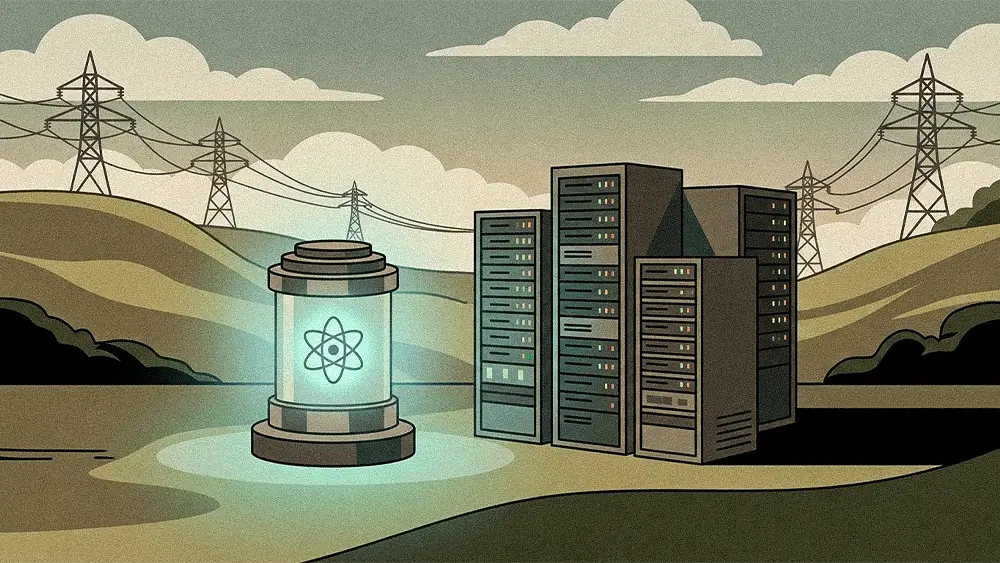
Husam Mohammed, MEP Design Director at Jacobs, on why the campuses being designed now are expected to produce their own power, water, and cooling on site.

Grace Wu, former Head of Product and Account Data Asset at HSBC, explains why stablecoins and tokenized assets are forcing financial institutions to redesign enterprise data architecture around real-time trust, governance, and accountability.

Mariyan Clement, Database Architect at IBM, explains why monitoring a backup job proves nothing about recovery, and why he destroyed his own database to find out what a restore really involves.

Everpure's Mike Russo and Richard Galvez on the orchestration, governance, and resilience gaps that separate AI experimentation from production in capital markets.

Greg Muscarella, GM of Portworx at Everpure, explains why storage, not compute or networking, is the constraint holding enterprises back as Kubernetes absorbs virtualized, containerized, and AI workloads onto a single platform.

Jayashankar Attupurathu, Technology Strategy Advisor to Boards and CXOs, on why the golden source, the pipeline, and sovereignty rules decide what a model can do.

Bogdan Muraru, a Field CTO working with UK enterprises, argues that AI maturity now shows up in six-month business cases, sovereign data fabrics, and the unsolved problem of agent identity rather than in pilot counts.

Arnab Ray, a Product Owner at Shell working in energy trading data, traces how two decades of market crises turned regulatory reporting into the data foundation that algorithmic trading and AI now run on.

Abdourahmane Tahir, Head of Digital Services at Applus, explains why operational digital twins depend on rebuilding fragmented asset information into a governed, connected data layer before anything else.

Katherine Hennessey, Head of U.S. Government Strategy at Everpure, explains why federal AI adoption depends less on model selection and more on modernizing the aging data infrastructure, storage architecture, and interoperability frameworks.

At Accelerate 2026, a Bloomberg Businessweek Radio broadcast surfaced a consistent diagnosis from CTOs, product leaders, a CFO, and a pharmaceutical platform engineer: the data layer is what separates AI experiments from AI that works.

For decades the public sector has called data its most strategic asset, even as the systems treat data as an afterthought. AI is changing that, and in government what's at stake is public trust.

Oliver Inseal, Divisional NPD Engineering Manager at Parker Hannifin, explains why industrial AI is only as trustworthy as the physical sensor producing the data underneath it.

Gangadhar Thumu, Lead Data Engineer at AT&T, breaks down why the hidden cost of data platform modernization is the duplicate work happening across business units that lack shared visibility.

Manoj Kumar Anugu, Senior Data Platform Engineer at COUNTRY Financial, explains how steady discipline keeps a data platform from sliding into a costly mess as it scales.

An Intel AI engineer and the CEO of a YC-backed inference startup are converging on the same conclusion: inference is becoming a state management problem, and the engineering required to solve it has been around for decades.

Jan Hoscan, VP and Head of Industrial at Everpure, argues that industrial AI succeeds or fails on whether companies can turn fragmented IT and OT data estates into unified, governed, AI-ready infrastructure.

Mohamed Azard Rilvan, Cybersecurity Consultant at Verizon Enterprise Solutions, explains why ETL is now a runtime environment, why inherited risk from third-party code will not go away, and why internal documentation matters more than any new tool.

Kjersten Moody, CEO for North America at Elai, explains why accumulated data debt is the primary bottleneck for enterprise AI and why agentic approaches are replacing the brute-force fixes that came before.

Hemant Soni, Digital Product Delivery Leader at Capgemini, explains why the organizations pulling ahead in media and telecom are not the ones with the most data, but the ones that close the loop on signals fastest.

Ajinkya Chatufale, Lead Data Engineer at Barclays, on why enterprise AI reaches production only when teams orchestrate use cases, models, agents, protocols, and human review as one system.

CTO and Chief AI Officer Sean G Miller discusses how AI leaders are building meaningful data sets with historical context, and how this task is best understood as bringing technology back into an organization's business culture.

Sandipan Bhaumik, Data and AI Technical Lead at Databricks, explains why AI agents that consume bad data without question are forcing governance into the architecture itself.

Ryan Ballantine, Director of Product Management at Options Technology, explains why Iceland's geothermal energy, transatlantic positioning, and geopolitical stability make it an optimal location for sovereign AI infrastructure in financial services.

Rajesh Ramaswami, Independent Advisor and former technology leader at Microsoft and Accenture, explains why most data governance problems originate in system design and delivery, and why engineering discipline is the only fix that holds.

Debjani Roy, a former Senior Director of Data and AI at BT, explains how unbudgeted price hikes, runaway egress fees, and catastrophic infrastructure failures are pushing large enterprises toward private sovereign clouds built on open-source foundations.

The era of rigid, costly enterprise software is ending. Kaycee Lai, VP of AI & Analytics at Everpure explains how AI is driving a new model where value lies in the data platform, not the app, and why enterprise-grade standards for AI are now essential.

José Siles, Data Engineer at Nestlé, explains why data governance keeps failing and why the fix has nothing to do with the tools organizations already have.

Sue Eze, an independent data governance consultant, explains why production-ready data is defined by traceability and accountability, not model performance, and why the gap between the two only surfaces when decisions need to be justified.

Ema Gutierrez, VP of AI Governance at Kira Tech AI, emphasizes embedding guardrails and commit gates directly into AI system design.

Ravish Kumar of BCS Technology International makes the case that data discipline, not model quality, determines AI success.

As AI demand causes cloud costs to spiral, Dan Kogan, VP of Cloud + New Products at Everpure, explains how data reduction software cuts bills and unlocks funds for innovation.

Nirav Sheth, VP of Worldwide Pre- and Post-Sales Engineering at Everpure, explains how integrated security and operational simplicity are shaping the next generation of enterprise data management.

Chadd Kenney, VP of Product Management at Everpure, lays out why AI only works at scale when enterprises move beyond storage and manage datasets with context, policy, and control.

Kaycee Lai, VP of Enterprise AI and Analytics at Everpure, discusses how collapsing manual data workflows is essential for real-time, AI-driven decision-making.

As enterprises race to scale AI, Options Technology VP Andrea Moccia explains why simplicity, not complexity, is becoming the decisive factor in turning infrastructure investment into real business outcomes.

Suresh Sankaran Srinivasan of Axiata explores how to build resilient systems, navigate digital risk, and stay ahead of crises that bridge the physical and digital worlds.

Vijay Kumar, Data Architect at Bizmetric, explains that most enterprise data failures stem from weak architecture that blocks reliable insight and long-term AI value.

Jayadev Vasantham, CTO of IndustryApps, shows how data spaces offer a workable path beyond centralized models that leave AI blind to meaning and context.

Nirav Sheth, a VP at Everpure, explains why AI and rising costs are forcing a shift to unified, cloud-smart hybrid architectures.

Grace Wu, Head of Product Data at HSBC, explains why the traditional single source of truth must evolve into a federated ecosystem to scale enterprise AI.

Saeed Kasmani, a Senior Data & AI Architect at IBM, explains how MIT’s latent-perception research reveals AI’s architectural security gaps.

Maria Luciana Axente, CEO at Responsible Intelligence, explains why sovereign AI means creating domestic value from foreign technology to improve an entire nation.

Oluwaseun Odeyemi, a Data Architect at the UK Health Security Agency, explains how to build a hybrid model for future resilience against major cloud outages.

Philip Asiala, a Senior Principal Enterprise Architect at SAIC, explains how company culture dictates cloud security architecture and its costs more often than technology.

Kishore Vutukuri, an Enterprise Architect at EY, explains why Zero Trust is a mandatory architecture for securing enterprises in the age of AI.
OpenAI signs a $38 billion, seven-year deal with Amazon Web Services for AI model training, marking a strategic pivot from its exclusive reliance on Microsoft.

Subhash Kommuru, VP of Enterprise Architecture at Wells Fargo, explains how a new blueprint for data architecture can help leaders avoid repeating costly mistakes with AI.

Armel Roméo Kouassi, a SVP at Northern Trust, explains why the rise of AI in global finance is creating new risks and how a new approach to governance can help.

Aarushi Khera, a Manager of Advanced Analytics at Walmart Connect, explains why Advertising Week 2025 highlighted a complex reality for the industry around data quality and governance.

Dr. Ganesh Selvaraj, a consultant in Data, AI, and Decision Intelligence, explains how a new wave of leaders is redefining governance as a strategic accelerator for enterprise AI innovation.

Paul S. Lavoie, the University of New Haven's VP of Innovation, explains why a broken partnership between industry and academia creates a knowledge gap that slows AI adoption in manufacturing.

Dr. Karaitiana Taiuru, a Māori Data Sovereignty and AI Ethics expert, explains how Indigenous-led data governance frameworks can help manage the risks of data globalization.

Rohit Kela, Industry Consulting Manager at NTT DATA, explains why financial firms chasing processing speed risk deploying AI systems that are fast but not trustworthy.

Gary Palmer, CEO of Payall Payment Systems, explains why regulators often struggle to regulate the financial industry and how the challenge introduces new risks.

Olivia Hyde, co-founder of Prompts to Profit, explains how an obsession with finding AI use cases can create inefficiencies for financial institutions that deploy enterprise AI.

Scott Cohen, EVP at Lineal, explains why law firms should focus on change management and human workflows for successful enterprise AI.

Gary Nakanelua, Managing Director of Product & Innovation at Blueprint Technologies, on the biggest threats to AI adoption.

Eric Snyder tech leader at the University of Rochester's Wilmot Cancer Institute, on healthcare's AI ambitions, "Innovation Theater", and cultural paralysis.

Ian Parker of facilities-level cooling company Healixa on energy-efficient cooling solutions for hyperscaler data centers.

Vinay Mummigatti, the EVP at Skan and former Chief Automation Officer at LexisNexis, on why a first-party data strategy beats having the latest models.

Ming "Tommy" Tang, Director of Bioinformatics at AstraZeneca, discusses data quality challenges in bioinformatics and how they stall scientific discovery.

Kolby Beck, Senior Solution Architect at Kimball Equipment Company, on why the rush to adopt AI often exposes significant structural issues for enterprises.

Gilles Closset, Global AI Ecosystem Leader at OVHcloud, discusses sovereign AI and the France Travail partnership.

Mitch Ashley, VP and Practice Lead at The Futurum Group, discusses conflicts in sovereign software practices and open source development