
As AI Uncouples Data From Applications, Storage Becomes The Foundation For Sovereign AI
Prakash Darji, GM of Digital Experience at Everpure, on why data primacy and corporate sovereignty are the new foundations of enterprise architecture.

Data, if you look at its story arc, was once subservient to applications. Now it's going to stand on its own.

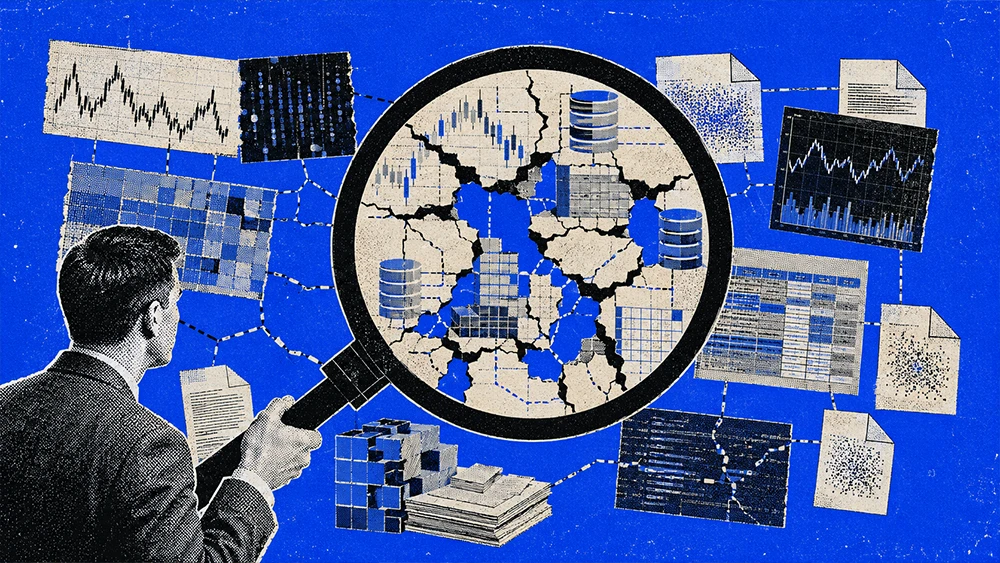
For four decades, enterprise data has lived inside the applications that produced it. Finance data belonged to the finance system, sales data to the CRM, and the work and the data traveled together as a single unit. AI breaks that arrangement. An agent asked to approve a profitable sales order needs sales data, finance data, credit-check data, and support logs at once, none of which sit in one place. The question that defines modern data management is no longer how to store what an application generates, but how to find what's relevant across everything the enterprise already has, and expose it safely.
Prakash Darji is General Manager of the Digital Experience Business Unit at Everpure. He came to infrastructure by way of the application and data layers above it, with earlier stints at SAP building applications and working on the HANA in-memory database and business intelligence products. That vantage point shapes his read of the current moment as a structural inversion of the relationship between data and the software that uses it—a shift Everpure CEO and Chairman Charles Giancarlo, and board member Andy Brown, frame as the move from data processing to data primacy.
"Data, if you look at its story arc, was once subservient to applications. Now it's going to stand on its own," he says. The reversal cascades through everything downstream: how enterprises find the data that matters, who controls it, and what the storage layer underneath is being asked to do.
The work and the data come apart
Darji frames the shift with a look backward at the relationship between work and the data that has historically enabled it. "Data and work used to happen in the same place," he says. "The shoemaker had knowledge of how to make a shoe, and he made the shoe. The data and the work went together."
Applications inherited that pattern: the finance application created finance data, which was used in the finance application, in a closed loop. AI severs it. "AI completely inverts the pyramid. The work is whatever the agent does, and the data is whatever it needs to do the work, regardless of where the data sits. They're no longer together," Darji explains.
The inversion retires an older definition of the data management discipline. It once meant integration, copying data out of silos into a warehouse to query and analyze it. In an agent-driven enterprise, the first problem is different and more basic. "The most fundamental question is which data is relevant," Darji says.
It's not an abstract concern. Feeding a model more than it needs can actively degrade the outcome. "The more data you give a model that isn't related to the problem you're solving, the more it hallucinates, and the more it token-maxes and spends your AI budget for a worse result." Getting the answer wrong in either direction, with too much data or the wrong data, is expensive, which puts a premium on knowing precisely what to retrieve.
Intelligence is how the enterprise finds what matters
Answering "which data?" at enterprise scale is the job Darji assigns to data intelligence, and it's the connective tissue between the architecture he describes and the governance it requires. The function, as he defines it, finds data wherever it lives and classifies it along several axes at once. It identifies the business domain a given dataset belongs to, whether finance or HR or sales. It builds a knowledge graph of what relates to what, mapping how a purchase order in one system corresponds to a record in another. It also flags what carries privacy or regulatory weight, like the personally identifiable information that can't cross a border or the transaction data that must stay secured.
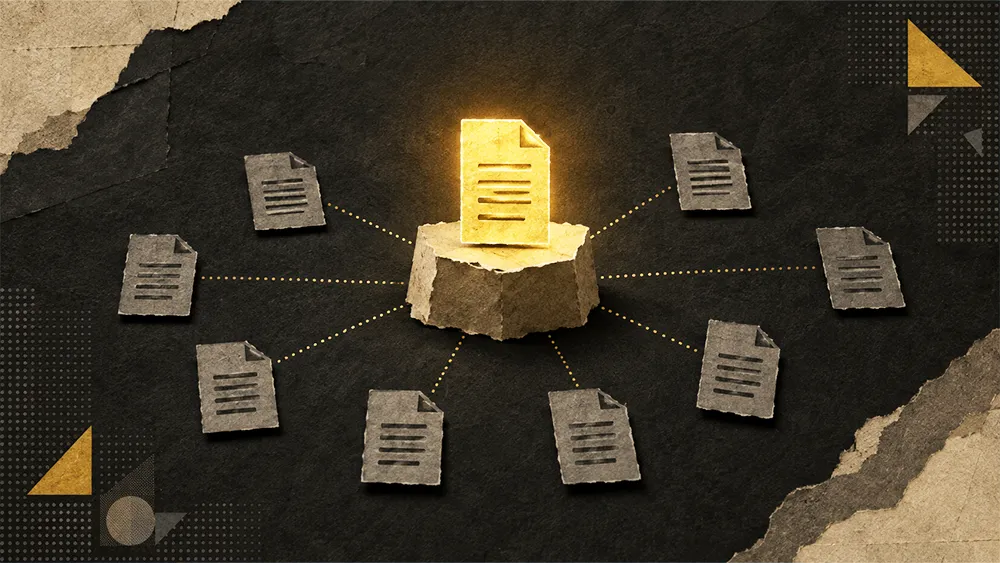
This is where the primary-source problem becomes acute, and Darji reaches for an everyday analogy to make the point. "In an enterprise, Salesforce could have the primary-source information about my sales orders, or a spreadsheet on someone's desktop could. Typically the spreadsheet is a copy, but AI doesn't know the difference. Data is data." Without a way to distinguish the authoritative record from its derivatives, an AI system reasons over whatever it finds, copies included.
That same visibility layer is what different stakeholders each reach for from their own angle. Darji has watched a CISO start building the catalog out of concern that proprietary information is leaking into AI, only for the chief data officer and the application owners to discover they need the same map for their own purposes. "Each persona is looking at that lens from a different facet, but the answer is the same technology—a knowledge graph of all of the entities and relationships in my organization, with semantic context or shared context that can be used for multiple personas in multiple places."
Sovereignty is about ownership, not geography
The thread running underneath all of this is ownership, and it leads Darji to the word he thinks is most often misread in these conversations: sovereignty. In his view, sovereignty goes beyond its usual association with where data physically sits. "I'd define sovereignty not as geopolitical sovereignty, but corporate sovereignty," he says. "How do you own your data? It's not about a locale. It's not about time. It's that this is mine, and the moment I give it to someone else, they're going to think it's theirs." Hosting a copy inside a hyperscaler's in-country region, he argues, doesn't settle the ownership question that matters.
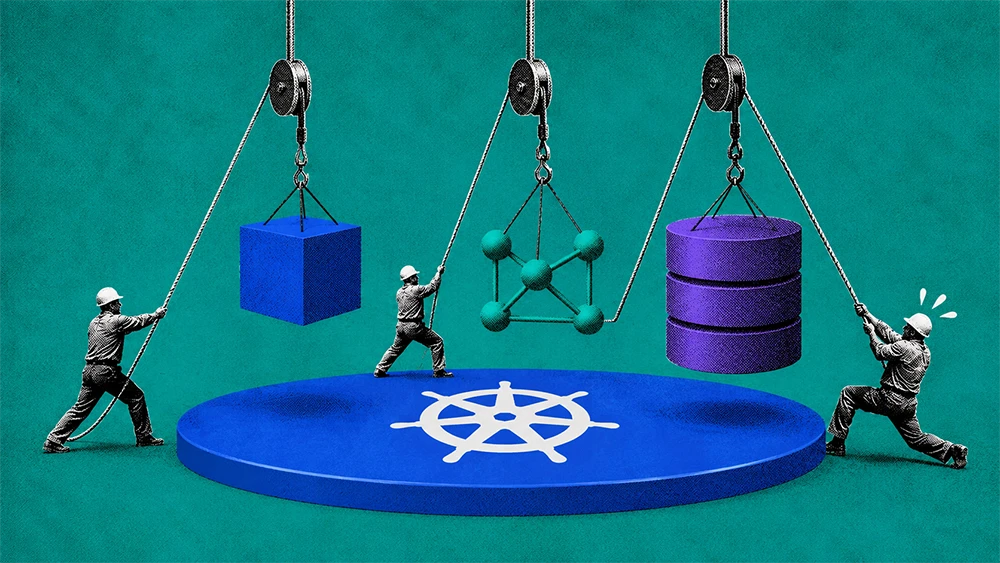
The remedy Darji proposes is to make data, rather than the application, the thing the enterprise builds around. "Applications should be workflows that consume data you own. You shouldn't have to buy the data container and the application together," he asserts. Treating data as primary in this way, he says, links sovereignty to efficiency: it cuts the endless copying that moves the same record into system after system, each copy a fresh chance to lose lineage and introduce error. "Data doesn't like being moved. It likes being accessed."
Find and remediate over lock and prevent
This philosophy puts Darji at odds with a governance style built on restriction. From his vantage point, locking data down until it can't be used defeats the reason for keeping it. "If you have your data and can't use it, what's the point of even having it?" The alternative he favors starts from total visibility rather than blanket prevention. "There's no start to governance if you don't know where your data is," he says.
Once an enterprise can see everything, compliance becomes a matter of detection and response rather than pre-emptive lockdown. If a scan turns up PII that was supposed to stay in Europe now sitting in Australia, that surfaces a conversation and a remediation, isolating or moving the data, rather than a wall that would have blocked legitimate work in the first place. "It's going to be more find-and-remediate, not control," he notes.
Storage moves up the stack
The architectural payoff Darji points to is a storage layer that understands the business meaning of what it holds. Historically, storage knew only technical primitives, like volumes, file systems, and blocks, with no notion of what the data was for. He describes an emerging model in which policies attach to semantic data groups, defined in business terms. An enterprise, for example, could designate all finance data related to approving purchase orders as a group and set its availability, resiliency, and recovery policies against that business definition rather than against raw storage constructs. "That's coming. That's not a thing that exists today, but it's emerging as a new capability that's now required in the world of AI," he says.
Underneath the architecture is a problem Darji identifies as the real driver of change: integration cost. "The single largest human-capital line item in the IT budget isn't software spend or hyperscaler spend. It's the integration cost of all the things you bought." A common, governed data foundation that AI, applications, and analytics can all work from, without copying, is his answer to that cost, and the reason he expects the shift to happen quickly. "The only reason anything ever happens is customer need," he says. "The pain point here is real."