
Why Capital Markets Firms Are Rethinking Data Infrastructure for Production AI
Everpure's Mike Russo and Richard Galvez on the orchestration, governance, and resilience gaps that separate AI experimentation from production in capital markets.

The bottleneck is no longer collecting the data. It’s turning that massive amount of data into usable insight and getting things to go from testing and training into production, inference, and revenue-generating outcomes.

Capital markets firms are not short on data. They have tick data, time series, structured trade records, PDFs, spreadsheets, sentiment feeds, and growing volumes of unstructured research content. The problem is turning that data into AI systems that can operate reliably at production scale. A model may work in a pilot. Users may see value. But moving from experimentation and training into production inference introduces demands that a pilot was never designed to test. The question facing firms now is not simply whether they can build an AI use case. It is whether they can operationalize it.
Mike Russo is General Manager of Financial Services at Everpure, with experience spanning capital markets, banking, quant trading, cloud, and operational resilience. Richard Galvez is Everpure's Director of Applied AI and Field Solutions Architect. He holds a PhD in computational physics and focuses on scaling AI systems into production.
"The bottleneck is no longer collecting the data," says Russo. "It’s turning that massive amount of data into usable insight and getting things to go from testing and training into production, inference, and revenue-generating outcomes."
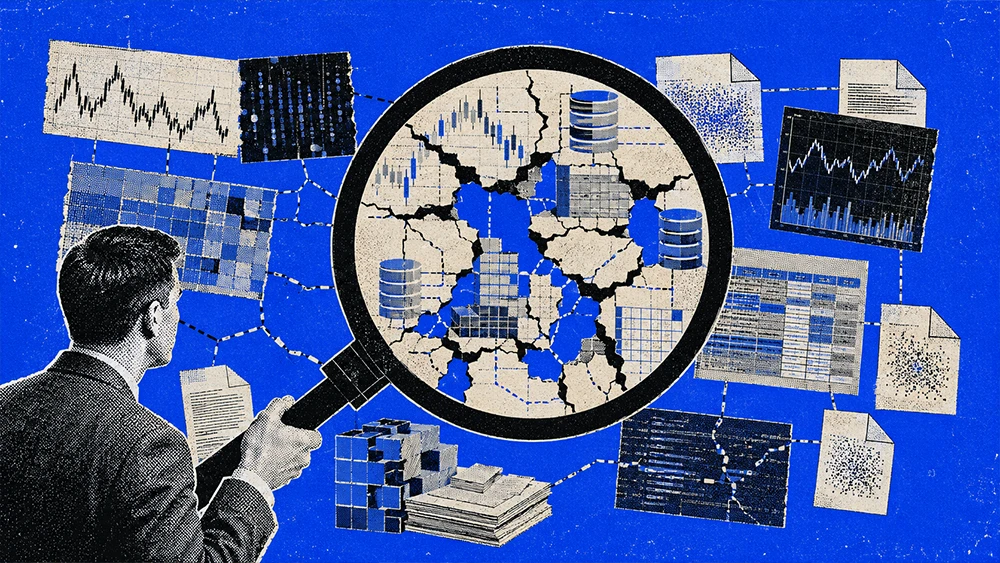
The magnifying glass effect
Russo says AI has changed how capital markets firms evaluate their data infrastructure. “AI has made a huge difference. It’s really put things under the magnifying glass on the data side. What does our data look like? Is that data clean? Is it ready?”
That scrutiny becomes more important as firms move beyond experimentation. Galvez says firms can suddenly encounter capacity constraints, higher data-movement requirements, and costs that were difficult to see at pilot scale.
Firms that invested heavily in GPU capacity are now confronting that distinction. Compute may get a model trained, but it does not by itself create a production-ready AI environment. As Russo puts it, firms are increasingly asking: “How do we go from training to inference?”
Data complexity grows with the use case
Structured trade data remains foundational, but AI increasingly draws on PDFs, spreadsheets, research content, sentiment feeds, and other unstructured sources. That changes the governance challenge. Firms need to know what data is being used, where it came from, who can access it, and whether it is appropriate for model training or production use.
Russo points to a common problem: teams copy production data into non-production environments for model training, only to discover later that some of that data was never cleared for the intended use. Sensitive information may need to be tagged, certain datasets may be restricted by geography, and access controls have to follow the data as it moves between environments. The issue is no longer simply making data available. It is making the right data available under the right conditions.
Production introduces a different operating challenge
Moving from a successful pilot to production changes the operating environment, and the accompanying pressures also expose friction between teams and tools. Russo says every handoff adds time and complexity. “Every time you have to pass an item from one team to another, from one tool to another, that introduces time and complexity.” Firms need repeatable processes for moving data into production environments without recreating those handoffs for every new use case.
That's where orchestration becomes part of the production equation. “You can have all the data you want, clean and structured,” Russo says. “But if you don’t have the correct processes making sure it’s getting to your models fast enough, and making sure the data being used is actually cleared for training, it doesn’t get you very far.”
AI resilience becomes part of production readiness
As AI moves into production workflows, resilience is no longer only about recovering systems after an outage or cyberattack. Firms also have to consider what happens when an AI system behaves unpredictably or is given the ability to interact with production systems.
Galvez uses the term “AI resilience” to describe part of this challenge. Because AI systems can be less deterministic than traditional applications, he says firms need guardrails around what models and agents are allowed to do. That means limiting permissions, narrowing their scope, and designing for the possibility that a system can be highly capable in one situation and unexpectedly unreliable in another.
Observability and traceability become part of that resilience strategy. Galvez says firms need enough visibility to understand how an AI system is performing, reconstruct what happened when something goes wrong, and determine whether it is still operating within acceptable boundaries. “What does ‘it works’ mean?” he asks. Firms need to evaluate whether a system is actually better, faster, less expensive, or more effective than the process it's replacing.
The readiness gap widens
Russo frames the competitive challenge in terms of velocity. “What’s one step behind today is three steps behind tomorrow and ten steps behind next week.” As more firms move AI from experimentation into production workflows, the gap will increasingly be defined by how quickly they can repeat that transition across new use cases.
Galvez says simplicity matters because complexity that seems manageable during a pilot becomes harder to control as systems scale. Firms that design for repeatability early are better positioned to expand successful AI use cases without recreating the same operational friction each time.
For capital markets firms, the advantage will not come from running the most AI experiments. It will come from building an environment where a successful experiment can become a reliable production system, and where the next one does not require starting over.