
Utilities Can Meet Much Of AI's Power Demand By Upgrading Infrastructure They Already Have
Brendan Andrews, Vice President of Energy and Infrastructure at Bureau Veritas, on why upgrading existing infrastructure beats waiting a decade for new capacity.
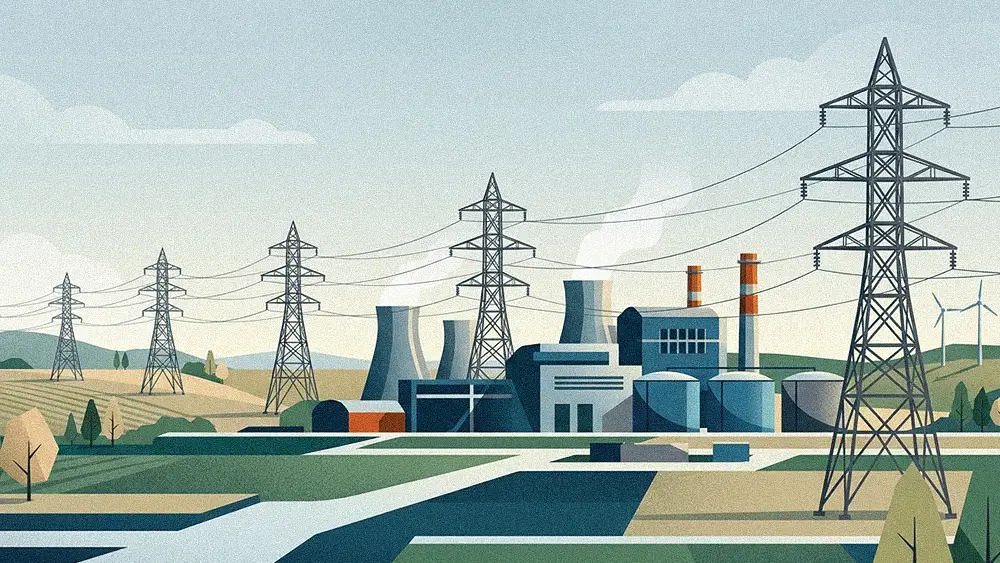

There is a great deal of underutilized capacity within existing infrastructure , and opportunities exist to unlock additional capacity through optimization and modernization rather than solely relying on new construction.

The debate over AI's electricity appetite has settled into two camps: the forecasts warning that data centers will overwhelm the grid, and the pushback insisting the fear is overblown. Both skip the harder question. U.S. data center electricity use has more than doubled since 2018, and federal analysts now project it could reach nearly 12% of the national total by 2030. Yet a large share of the demand now being quoted hasn't been built, financed, or even sited. The work in front of utilities, regulators, and operators is to separate the load that's real from the load that's speculative, then move enough power to meet it without waiting a decade for entirely new infrastructure.
Brendan Andrews is Vice President of Energy and Infrastructure at Bureau Veritas, a testing, inspection, and certification firm that advises clients across power generation, grid modernization, and mission-critical facilities. He has spent more than 25 years in energy and infrastructure markets, with a focus on power generation, battery energy storage, renewables, and the data centers now reshaping demand. His work puts him alongside the developers and utilities navigating the technical, regulatory, and supply-chain questions that come with building at this scale.
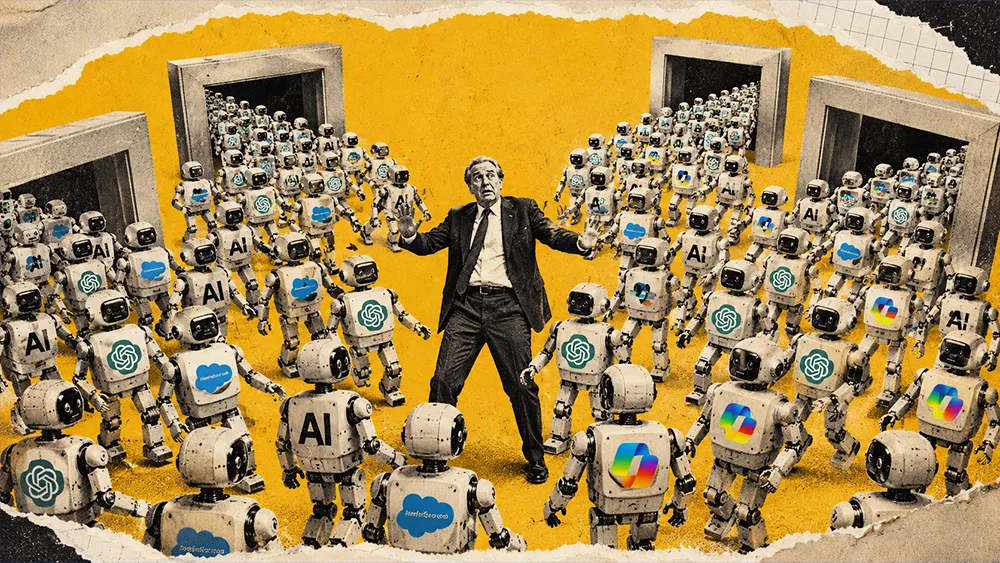
For Andrews, the starting point is honesty about the numbers. "There's a lot of speculative demand, and that's where we need to be really careful," he says. "We're hearing power requests from AI and data center developers that add up to hundreds of gigawatts over the next five to seven years."
Sorting real demand from speculation
The forecasting problem isn't that demand is small. It's that the headline figures bundle firm projects together with speculative ones, and the industry lacks the components and the technology to deliver everything on the list at once. Treating every announced gigawatt as certain load is how utilities over-build, ratepayers absorb the cost, and planners lose the ability to tell which projects to prioritize. Andrews is quick to add that the demand isn't abstract, either. It comes from the same consumers who expect instant, always-on digital services, and who rarely connect those services to the power and infrastructure behind them.
That gap between quoted demand and real demand is starting to shape policy at the state level. Andrews points to a wave of jurisdictions that have moved to pause new projects while they study the impact on grids, water, and local budgets, a posture that now reaches well beyond the states people expect. "Even in red states, you're seeing moratoriums or a pause on development, and I don't think that's a bad thing," he says. The value of a pause, in his view, is that it forces a real local forecast instead of a national one. "What's good for one area isn't good for another. It really needs to be an understanding of what each state, each city, each town is going to deal with."
A grid built for a smaller load
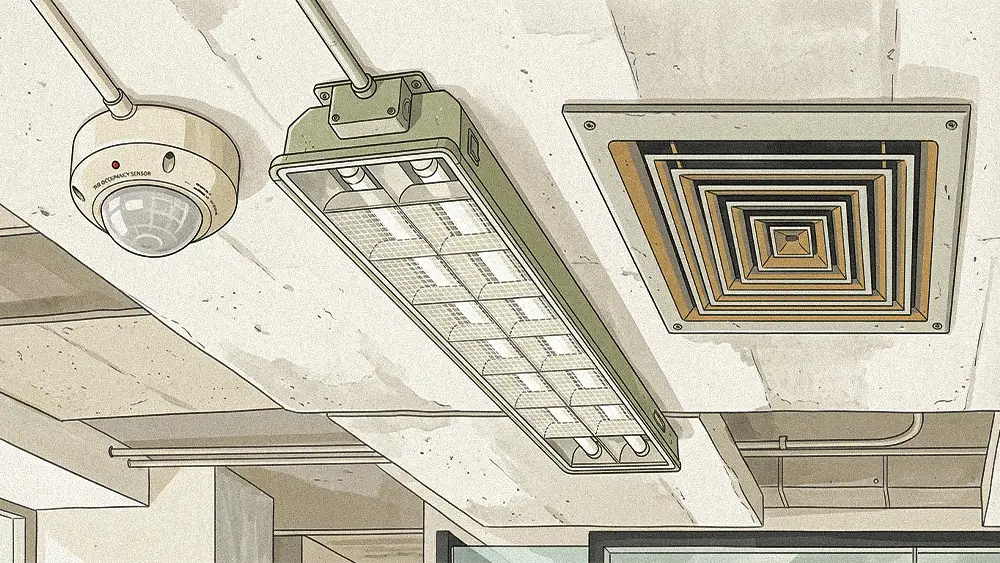
Even where the demand is firm, the physical grid wasn't sized for it. Much of the transmission network carrying power today was designed for loads it was never meant to serve, and the age of the equipment shows the moment you look up. "The future of energy isn't just about adding more wires," Andrews says. "It's about building the infrastructure that allows the grid to carry more power, more efficiently, and at a scale never seen before."
He's careful to separate the engineering reality from the public fear that tends to attach to it. The prospect of new load near a neighborhood gets read as a threat to reliability and household bills, when the actual requirement is investment in the network that's already there. "People hear this and think it means higher utility bills, blackouts, brownouts," he says. "That's not the case. What it requires is upgrades to the existing infrastructure." The distinction shapes who should carry the cost, and Andrews argues the investment belongs with the parties consuming the power rather than the families living around it.
Upgrade before you build new
Here Andrews makes the point that matters most for anyone trying to move quickly: a lot of headroom is already sitting in the system. "There is a great deal of underutilized capacity within existing infrastructure , and opportunities exist to unlock additional capacity through optimization and modernization rather than solely relying on new construction," he says. Reconductoring older lines with higher-capacity conductors, pulling them across existing towers, and building along existing rights-of-way all add throughput without the multi-year fight that greenfield transmission triggers. "When permitting takes years, existing rights-of-way become one of the most valuable assets for expanding grid capacity."
The logic runs parallel to the efficiency case being made on the compute side of the same problem, where the priority is getting more useful work out of every watt and rack before adding raw capacity. Upgrading a line the industry already owns puts far less strain on a stretched supply chain than sourcing everything new, and it keeps power flowing while the work happens. That last part matters more than it sounds. "The last thing you want to do is shut people's power down," Andrews says, because an hour-long outage is enough to turn a community against the entire buildout.
When the data center becomes the utility
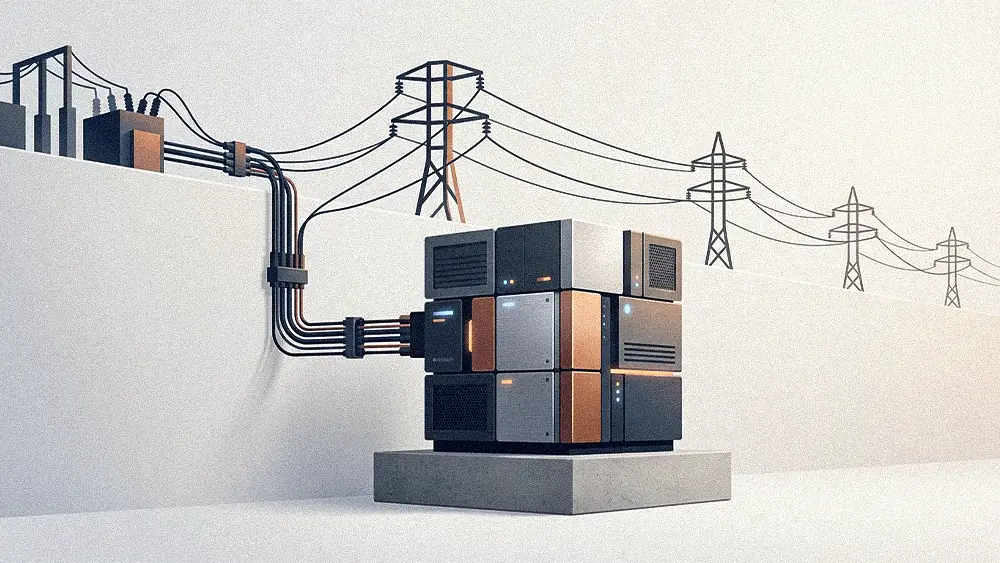
The other release valve is generation that sits at the load. Rather than wait years for a grid connection, developers are building power directly into their campuses. "We're seeing power generation integrated on site, whether that's renewables, fuel cells, or reciprocating engines, and it's happening at light speed," Andrews says. The scale has changed what that means. The early data centers were small buildings; the ones going up now are multi-gigawatt campuses that can draw more power than a small city, and increasingly they produce it on site instead of pulling it all from the grid.
At that scale, the facility stops being a pure consumer of electricity. "These large data centers are becoming their own power producers. For all intents and purposes, they become their own utility," Andrews says. The surplus doesn't have to stay behind the fence. "They're producing a large amount of power that can be used not just at the data center but across the surrounding community as a backup if there are any issues." A campus built to guarantee its own reliability can end up shoring up the grid around it, which reframes the "not in my backyard" reaction that has slowed wind, solar, and now data centers alike.
The supply chain sets the pace
None of it moves faster than the equipment allows, and the equipment is the constraint. "With transformers, you're looking at three years, 36 to 48 month lead times," Andrews says. "And these developers are building data centers quickly." The mismatch is structural: securing a large power transformer can take up to four years, with lead times having nearly doubled since 2021, while the campuses those transformers serve are being financed and committed to cloud providers before they break ground. A domestic manufacturing base is growing to close the gap, but not on the timeline the buildout wants.
Lead time is only the visible part of the risk. "You've got supply chain risks, and I'm not just talking about long lead times," Andrews says. "There are security and cybersecurity risks, and there are now regulations tied to this." He points to recent moves to restrict foreign-made grid hardware, including the decision to add networked power inverters to a federal covered list over national-security concerns. This is the seam where third-party verification of a component's safety and compliance becomes part of the timeline, the kind of assessment work his firm does across the sector.
For all the constraints, Andrews lands on the opportunity, and he expects it to run for a decade. He's an "all of the above" advocate on generation, arguing that a global society this dependent on compute needs every source it can bring online. The pressure also runs past data centers entirely. "We're just talking about data centers," he says. "Think about all the EVs coming into play, and the fact that everything in your house is connected now. All of it requires more power." The buildout that answers that demand, in his read, is less a crisis to manage than a generational investment. "I'm excited about what this will do for generations to come. It's a game changer, and it's already changing the world."