
AI Infrastructure's Real Bottleneck Is The Grid That Was Never Built To Power It
Prithpal Khajuria, Segment Leader for Energy & Utilities at Intel and Co-Founder of the vPAC Alliance, explains why electricity delivery, not GPUs or silicon, determines how fast AI scales, and why every unpowered cluster costs millions per day.


It's not a GPU problem, it's not a silicon problem, it's not a networking problem, it's not a software problem. It's an electrical problem. That's where the gap is.

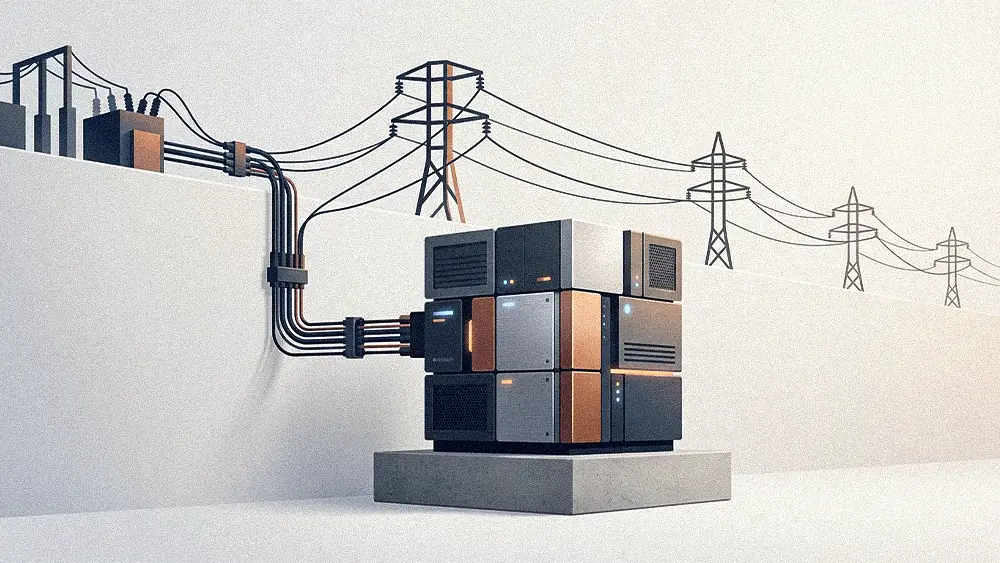
The AI industry is announcing gigawatt-scale data centers while the grid infrastructure those facilities depend on was built for 3% to 4% annual load growth and steady industrial demand. The mismatch between what gets announced and what can be energized is creating billions in stranded capacity risk.
Prithpal Khajuria is Segment Leader for Energy & Utilities at Intel, managing strategy across utilities, OEMs, and infrastructure partners in more than 50 countries. In 2019, he led the world's first virtualized protection relay demonstration with Southern California Edison and Salt River Project, which became the foundation for co-founding the vPAC Alliance in 2023, now a coalition of 35-plus utilities and technology companies including ABB, Siemens Energy, and GE Vernova.
"It's not a GPU problem, it's not a silicon problem, it's not a networking problem, it's not a software problem. It's an electrical problem. That's where the gap is," says Khajuria.
The grid was built for a different era
Khajuria frames the fundamental clash directly: the grid was engineered for factories that ramp once and run steadily. AI data centers behave nothing like that. Training workloads operate in sustained bursts. Inference is random and unpredictable. And the people building these facilities often have no background in power systems.
"When we build a facility, we need to know what the operating envelope of that data center is. What is the maximum power it is going to consume, and at what rate?" Khajuria says. "Nobody has a clue about it. If I go to a utility and say I need 500 megawatts of power, under what conditions?" Without that context, utilities cannot plan, and the result is interconnection delays that stretch 12 to 18 months for loads above 200 MW.
Khajuria points to a dynamic that explains much of the noise. "Recently I was at one of the conferences. 60% of the people were real estate people," he says. "They have a piece of land, and they want to build a building and rent it. They don't have expertise in power systems." A significant share of announcements come from developers who have never had to think about how electricity gets delivered.
The stranded capacity problem
A one-gigawatt announcement does not mean one gigawatt on day one. Khajuria describes real buildouts as phased: 10 MW to 50 MW to 100 MW to 250 MW, ramping over five to 10 years. The gap between announcement and energization is where capital gets stranded.
"A cluster which is not powered every day is a few million dollar loss for the enterprise building the data center," Khajuria says. That math makes power delivery the single largest variable in AI infrastructure ROI, and it is a variable most compute-focused teams have never owned.
Some operators build local power generation to bypass grid constraints. Khajuria argues that path has structural limits. "In order to run a 1 gigawatt facility on local generation, you need 2 to 3x power because you need redundancy and reliability," he says. Every large industrial site receives two redundant feeds from the grid. Behind-the-meter solutions cannot replicate that at gigawatt scale without becoming economically prohibitive.
Utilities must lead, not follow
Khajuria's prescription is structural. Utilities need to own the coordination effort, regulators need to empower them to move faster, and hyperscalers need to engage directly.
"We saw this coming 10 years ago," Khajuria says. The vPAC Alliance brought utilities, OEMs, EPCs, software vendors, and hardware vendors into a single coalition to standardize and modernize grid infrastructure. The goal is replicable, software-defined systems that compress engineering timelines. "We cannot engineer one project at a time. We need to build something which is replicable, that you can deploy easily from one place to the next."=
Tomorrow's substation engineer will be half IT engineer, half OT engineer. "When the PC came, one IBM CEO said it is not the PC going to take your job. It is another human being with the PC going to take your job," Khajuria says. The same applies to power systems talent. Those skills need to come together if deployment is going to keep pace.
The coordination challenge Khajuria describes is not a future risk. It is already shaping which AI projects move forward and which sit idle. "Assigning a contract does not mean delivering the power," Khajuria says. "We led the world in the industrial revolution. We need to lead it again into this new era. And the only way we can lead it is if we can provide the power."