
Enterprises face complexity, resource limits, and sprawling workloads. The solution that resonates most is a unified operating environment that brings simplicity and automation to every layer of the stack.
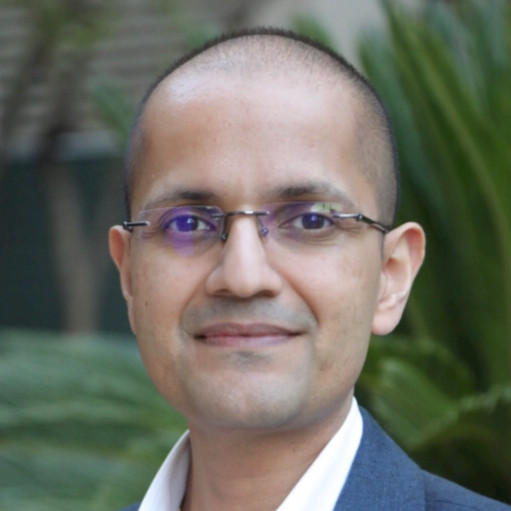 Nirav ShethVP and Leader of Worldwide Pre- and Post-Sales Engineering @ Everpure
Enterprise leaders are no longer constrained by access to technology, but by the complexity required to operate it safely and successfully at scale. The daily tax of managing fragmented environments sprawls across data centers, clouds, and the edge, highlighting that the biggest barrier to progress isn’t innovation, but the growing weight of operational friction. In response, execs are increasingly turning to the enterprise data cloud to align and integrate distributed operations under a single operating framework to create a unifying operating model that removes this friction by simplifying the human experience of managing vast data estates at scale.
Nirav Sheth, VP and Leader of Worldwide Pre- and Post-Sales Engineering at Everpure, believes enterprise IT isn't just about the infrastructure component but about the people navigating and managing it daily. From hybrid cloud strategies to the challenges of securing distributed environments, his conversations with enterprise executives often surround translating operational complexity into actionable solutions. Sheth believes today's leaders are facing a multitude of defining challenges, ranging from security to budgets to transformation.
"Enterprises face complexity, resource limits, and sprawling workloads. The solution that resonates most is a unified operating environment that brings simplicity and automation to every layer of the stack." According to Sheth, this focus on simplicity isn't a recent marketing pivot—it’s a design principle baked into the company’s DNA by its founding architects.
- One and done: The first pillar of this philosophy is a single, unified operating environment that runs across the entire product portfolio, eliminating the "overhead and tax" of managing disparate systems. It transforms fragmented IT into a cohesive, manageable environment that accelerates decision-making and drives real business impact. “We have one common operating environment across the entirety of our portfolio. Whether it’s AI, virtualized workloads, databases, or file systems, it’s one and done for the customer,” Sheth says. This philosophy delivers predictable, simplified operations, giving enterprises a single point of control for even the most complex data estates.
That philosophy is coupled with the company's Evergreen Architecture, a model designed to eliminate the disruptive and capital-intensive "forklift upgrade" cycle. By providing continuous, non-disruptive hardware and software updates, the architecture delivers predictable costs and prevents customers from ever being forced to run on aging infrastructure. Sheth notes that some customers, "from as far back as 2011," are still on their original chassis while everything inside has been constantly refreshed.
- Upgrade, uninterrupted: Traditional hardware refresh cycles are costly, time-consuming, and often require downtime, forcing organizations to pause projects or over-allocate resources. "We’ve done over 30,000 non-disruptive hardware upgrades in production. Customers are staying current without migrations, without downtime, and without having to rethink their infrastructure every three to five years," Sheth explains.
The third pillar is a common management plane, Pure1, which delivers consumer-grade simplicity to an enterprise-class platform. The focus on the human interface is designed to help IT teams escape the constraints of technical debt and resource shortages. According to Sheth, the result is that some customers can run exabytes of data with just a handful of people.
The foundation is also built to change, which is evident in the introduction of Fusion, what the company calls its intelligent control plane. The technology transforms what were once isolated islands of storage into a unified cloud environment. Sheth describes an example where, if one array is at full capacity and another is at half capacity, Fusion can automatically load balance between them. As enterprises grapple with the practical challenges of deploying AI at scale, this architectural flexibility is often seen as a requirement for delivering real-world ROI. The architectural strategy also points toward a crucial outcome beyond operational efficiency: cyber resilience. Sheth explains that the combination of the current geopolitical climate and the rise of AI tools has dramatically escalated the threat. In this new global cybersecurity environment, he says, a simple, integrated platform has become key for building an effective defense.
- Protect, act, and remediate: Sheth frames the solution in a "protect, act, and remediate" framework, where the same architecture that delivers operational simplicity provides the foundation for an automated security ecosystem. The platform provides capabilities like Safe Mode and even a "clean room" service to restore operations, while the intelligent control plane enables deep integrations with market leaders like Rubrik and CrowdStrike.
- Proactive security, simplified: While Pure1 is designed to streamline day-to-day management, its value extends further by serving a dual role as a proactive security engine. By embedding security visibility directly into the management interface, Pure1 helps enterprises treat cyber resilience as an integral part of everyday operations, rather than a separate, reactive task. "We launched a security capability in Pure1 where customers can benchmark themselves, based on all the global data and modeling we do, and essentially get a score from one to five, showing where they stand and giving concrete recommendations to improve their posture."
Ultimately, Sheth views the enterprise data cloud as more than a set of tools, and more as a way to simplify the human experience of managing complex IT environments. The real value, he explains, lies in business outcomes: reduced operational friction, predictable upgrades, and integrated security that enable teams to focus on innovation and their core business rather than routine maintenance. "We're not a security provider per se," Sheth clarifies. "That role belongs to our partners, like Rubrik and Palo Alto Networks. But our end-to-end platform addresses the customer's cyber resilience and risk management needs across that entire continuum, either directly or through tight integrations with those market leaders." In this way, the enterprise data cloud becomes a compelling foundation for operational efficiency and a framework for enterprise leaders to make confident, forward-looking decisions while reducing complexity and empowering their teams.