
The moat isn't the data itself, it's the architectural discipline to close the loop and act on signals faster than anyone else.
 Hemant SoniDigital Product Delivery & Management Leader @ Capgemini
The views and opinions expressed are those of Hemant Soni and do not represent the official policy or position of any organization.
Every major media and telecom company has data. Most have AI ambitions, but very few have the infrastructure to connect the two in real time. The gap between collecting signals and acting on them is where competitive advantage now lives, and most organizations are on the wrong side of it. That's why enterprises are racing to build out that infrastructure, to use data to inform decisions as quickly as possible.
Hemant Soni is a Digital Product Delivery & Management Leader in the Telecom, Media, and Technology Practice at Capgemini. With over 20 years of advising Fortune 50 companies on digital transformation, Soni has led application development for Tier 1 service providers and spearheaded the adoption of generative AI for sales automation. He is a Forbes Technology Council member and an Ambassador at the International Society of Service Innovation Professionals. And he's pretty clear that it isn't the data that will drive transformation. Rather, it's the architecture. "The moat isn't the data itself, it's the architectural discipline to close the loop and act on signals faster than anyone else," says Soni.
The distinction matters. Companies like Netflix and Spotify don't win because they possess more data than their competitors. They win because every micro-interaction feeds a decisioning system that sharpens what users see and hear within milliseconds. A pause, a hover, and a rewind all become inputs that simultaneously shape recommendations, content commissioning, and the UI. Legacy broadcasters may have comparable data volumes, but without the infrastructure to activate in real time, the data sits idle.
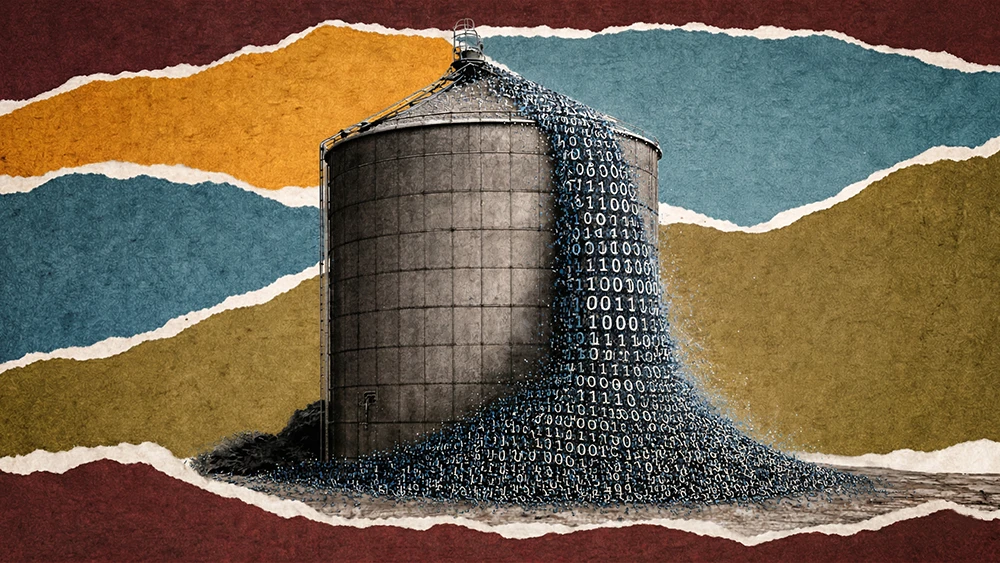
"Owning more data doesn't win; building better-instrumented feedback systems that continuously learn and respond in real time does," Soni says. Companies that invest in data collection without building a feedback architecture end up with what he calls "data graveyards," where complex, ungoverned data pools live outside any significant feedback architecture. But audiences increasingly expect systems that respond to their intent and history, and the organizations best positioned to meet that expectation are those that treat every user interaction as input to a system that learns, responds, and coordinates in real time.
- The intelligent operating system: Soni sees leading organizations building what he calls a composable decisioning layer that sits atop content assets and responds dynamically to user intent. Media companies need a similar operating model. "The separating capability will be real-time intent modeling. Understanding not just what the user consumed last, but what emotional or functional needs drive their sessions right now."
- Segmenting moments, not people: Traditional segmentation groups users by demographics or behavioral patterns like frequency and content affinity. Soni argues that the approach is already lagging. "The same user carries a completely different intent across different moments," he says. In a telco he works with, high-value customers and high-churn-risk customers looked identical under traditional behavioral segments. Micro-pattern modeling on session velocity and feature interaction separated them with high confidence. The standard is shifting from segmenting users to segmenting sessions in real time.
Despite heavy investment, most organizations fail to reach this state. Soni identifies three execution gaps that stall transformation journeys regardless of company size: latency, context and fragmentation, and orchestration. These gaps all address issues of speed, scalability, and governance that can undermine architectural choices before they can prove themselves.
Sub-second latency from user action to the model's response to the interface is the operational bar that separates real-time systems from reporting infrastructure — and very few organizations have built end-to-end with that standard in mind. The shift toward event-driven, streaming data pipelines is what makes continuous segmentation and always-on learning possible. Without it, even the best models are working with stale inputs.
- Data formation debt: According to Soni, AI amplifies underlying data problems. "Organizations want to jump on AI use cases, but they haven't resolved fundamental data quality and governance issues," Soni says. Enterprises cannot build a recommendation engine on duplicate or ill-organized customer data.
- Organizational misalignment: AI touches products, engineering, data science, legal, ethics, and marketing simultaneously. Soni has watched technically excellent AI initiatives fail to gain traction because no executive championed the translation of model outputs into business decisions. "The organizations that stall are the ones treating it as a technology program rather than a business transformation program."
Content IP and exclusive deals still matter. But audiences increasingly expect systems that respond to their intent and history, and the organizations best positioned to meet that expectation are those that treat every user interaction as input to a system that learns, responds, and coordinates in real time.
Even with good data and good models, disconnected systems make locally optimal but globally incoherent decisions. Soni gives a pointed example: a churn-risk model flags a user for retention intervention at the exact moment an ad system serves them a heavy ad load. "No one coordinated these signals," he says. What's missing is a unified behavioral graph and a real-time identity layer that stitches signals into a coherent profile that any downstream system can consume.
The companies moving fastest are those that invested early in cross-functional capabilities — whether in-house or through external partnerships — to build the talent in ML engineering, product management, and streaming pipelines that bridge the gap between AI ambition and production reality. "Most companies don't lack ambition with AI," Soni says. "They lack the infrastructure, alignment, and data integrity to turn it into real, adaptive experiences."