
Everpure VP Champions AI-Aware Platforms as Monolithic Software Models Fade
The era of rigid, costly enterprise software is ending. Kaycee Lai, VP of AI & Analytics at Everpure explains how AI is driving a new model where value lies in the data platform, not the app, and why enterprise-grade standards for AI are now essential.
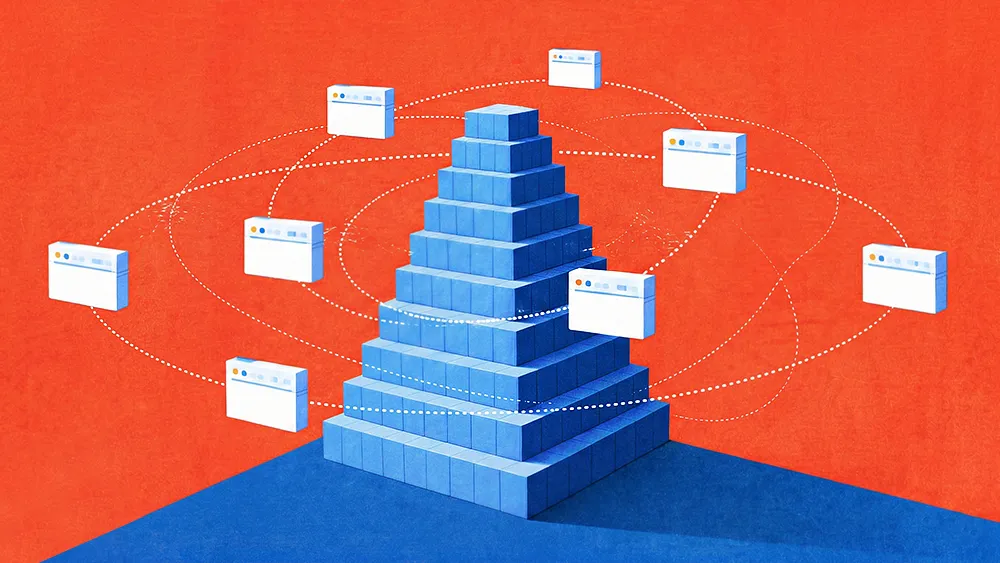

Before, the value was in the software application that controlled the workflow. Now, the value moves to the data platform providing the APIs and capabilities these applications need.

The rise of artificial intelligence is dismantling the monolithic enterprise software model, shifting the source of enterprise value away from the application, and down into the underlying data platform, giving rise to a new generation of applications. For decades, unwieldy 6,500-page user manuals, runaway customization costs, and vendor lock-in were simply the price of doing business. The economics were just as punishing, with scenarios where a $5 million software license would be followed by a $200 million implementation. The question for enterprise leaders is no longer how to manage monolithic software, but whether their data platform is ready to replace it as the primary strategic asset.
Kaycee Lai, Vice President of Artificial Intelligence & Analytics at Everpure (formerly Pure Storage), brings over two decades of leadership experience in data innovation and AI. As the founder of Promethium and the original pioneer of the Data Fabric concept, Lai holds multiple AI patents and has built and exited several enterprise technology companies. He argues the entire enterprise value chain is inverting.
"Before, the value was in the software application that controlled the workflow. Now, the value moves to the data platform providing the APIs and capabilities these applications need. The platform provides performance, data, governance, security, and query access on demand, so you can decide how to build the app, how it looks, and how it's administered," says Lai. It's a structural shift that Lai sees already reshaping how enterprises think about application modernization and where technology investment actually compounds. The platform, not the app, is becoming the strategic asset.
Lai notes that a fluid user experience is often only possible when built upon a hardened, immutable underlying platform. As that shift takes hold, user-generated interfaces can change moment to moment. But maintaining the governance and enterprise standards beneath that flexibility is where the real architectural challenge lies.
- Business in the front: "AI is excellent at giving you a custom view of precisely what you need to see, when you need to see it. The UI and UX can be fluid and malleable. For example, my view this week might need to be completely different next month, if my goals change. But the underlying layer cannot change. Governance, security, and performance must be immutable. Any application that offers a fluid front-end is basically demo-ware unless it is built on that immutable foundation," notes Lai. For enterprises building on AI, the flexibility at the top is only as valuable as the discipline enforced below it.
Lai sees the path forward as applying the same battle-tested governance principles from tier-one applications directly to AI workloads. As AI becomes a core business function, he believes it must meet the same tier-one standards as other systems essential for operations. Achieving this level of consistency is a deliberate architectural choice. Everpure's Purity Operating System extends the same OS, data management, and governance layer across all its products, from FlashArray to FlashBlade to its AI Data Platform. He calls this concept "AI-Aware Extensibility," a new benchmark he says is necessary for competing effectively in the age of AI.
- Standard issue: "When AI is core to the business, the question becomes: shouldn’t you apply the same standards to AI that you apply to your tier-one applications? You don’t need to invent a new wheel. Don’t have three standard wheels and then a fourth that is smaller, larger, and doesn’t fit. You need four identical wheels. That is the model for applying enterprise-grade governance, security, and performance to AI," he explains. The analogy is simple, but the architectural discipline it demands is not.
- RAGS to riches: This new demand is being met by a new breed of infrastructure. These are API-first platforms built on consistent operating systems across workloads that can enforce enterprise-wide standards automatically. You can already see this development in action, with processes like RAG pipelines now running directly inside the storage platform. Modern AI teams look at their API-first data stacks and infinitely extensible lakehouses, and it forces them to ask why their storage platform isn't the same. "It's a damn good question, and the simple answer is that storage never had to be before," Lai points out. But it does now.
This technological evolution is amplified by a human one: a new generation of workers who, in Lai's view, expect to "roll their own flow." He characterizes them as embodying a new social contract with IT, an attitude that once governance and security standards are met, they should be free to access the data they want without interference. It's an attitude that, as Lai sees it, implicitly asks why anyone should care how they work, as long as they are complying with the rules. This expectation for user control, which puts user-centric design "on steroids," drives major strategic moves, like his own company's recent rebranding, signaling its evolution to a comprehensive platform provider. This new reality is powered by AI-aware, extensible data platforms that enable businesses to innovate faster, ultimately positioning infrastructure providers to win.
"We used to build giant, monolithic apps. It was like going to a restaurant that only serves a 10-course prefix menu, where the unwavering rule is that you must have all ten courses, whether you are hungry or not. The new world is like dim sum. Today I want the shrimp dumpling. Tomorrow, I might want the shumai. That is how modern and flexible organizations now operate," he concludes.