
Most of the time, the information is there, but organizations do not know where it is, what format it is in, or who owns it. If you do the assessment and validation properly, you can usually reach about 98% accuracy.
 Abdourahmane TahirHead of Digital Services @ Applus+
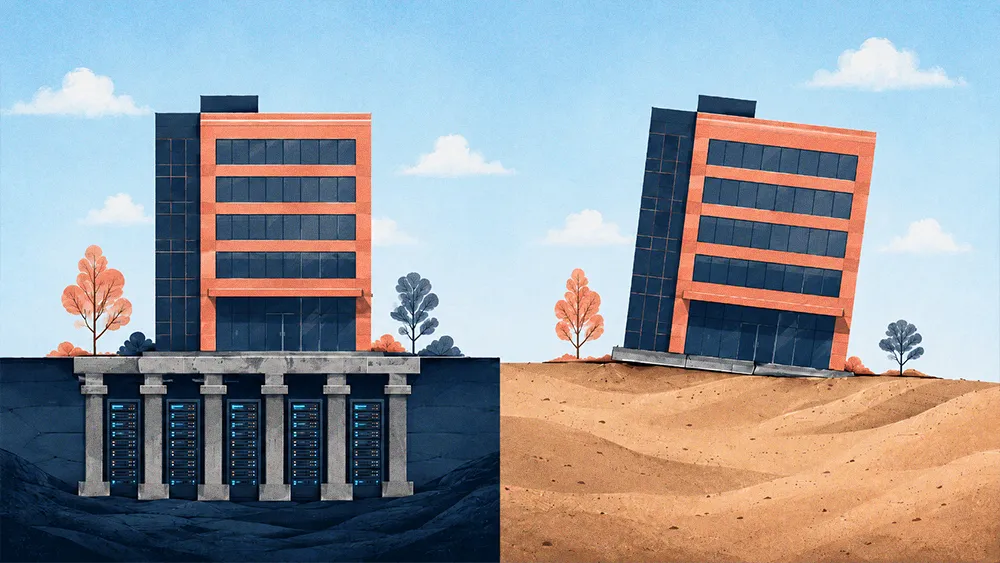
Organizations investing in digital twins tend to focus on the platform: the dashboards, the AI layer, the real-time views that promise better decisions. But the projects that fail share the same root cause. The asset data underneath was never trustworthy to begin with. For buildings and infrastructure built decades ago, the gap is not a technology problem. It is a data recovery and governance problem.
Abdourahmane Tahir, Head of Digital Services at Applus+ in the Middle East, leads the establishment and growth of the company's digital services department across the energy and construction sectors. Applus+ is a global testing, inspection, and certification company operating in more than 65 countries. His team drives asset digitization, digital twin, and reality capture initiatives for large-scale built environments. Across engagements, he finds that digital twin outcomes depend less on the platform and more on whether the asset data underneath has been recovered and governed.
"Most of the time, the information is there, but organizations do not know where it is, what format it is in, or who owns it. If you do the assessment and validation properly, you can usually reach about 98% accuracy," says Tahir.
The typical starting point
Tahir's team works primarily with built environments: assets constructed ten, twenty, or even a hundred years ago. The engagement almost always begins with the same discovery.
"Forget about 3D BIM, which is the foundation for the digital twin. The biggest problem in these assets is normally the simplest information, like accurate as-builts. They don't have it," Tahir says. Maintenance records, work orders, and asset attributes are either missing entirely, stored locally on someone's desktop, or scattered across incompatible formats with no consistent structure. New construction projects tend to have the data, but rarely have a strategy in place to maintain it through design, construction, and into operation.
Recovering the information
The recovery starts with reality capture. Tahir's team uses laser scanning, drones, and related technologies to digitize the physical environment and produce a 3D BIM model. That solves the geometry problem. The harder work is making that model intelligent by gathering, validating, and unifying the scattered asset data around it.
"We do site validation when it comes to asset attributes or asset labels that are already on site. That gives us a lot of information. When it comes to manuals, sometimes we have to reach out to manufacturers," Tahir says. Third-party inspection, on-site verification, and manufacturer outreach combine to fill the gaps that block a trustworthy data foundation.
Before any of that data enters a model, Tahir's team establishes the governance layer. "Sometimes we start with setting up the strategy and standards, because there is not even a standard naming convention in some scenarios." Existing information is converted into one unified format, loaded into the BIM model, and the result is an intelligent model with all asset attributes in one place.
From model to operational digital twin
A clean 3D model with unified data is not yet a digital twin. The distinction, for Tahir, is operational. A true digital twin connects all existing systems into a single platform where teams make decisions in real time. That means integrating BIM with maintenance platforms, ERP, facility management, GIS, and IoT data through a knowledge graph that maps each asset to a unique tag, pulling from multiple sources.
"I would say 50% automated, but it is still human-involved to make sure that the right information goes into the right place," Tahir says. Without consistent naming and clear data ownership already established, automation breaks down.
The payoff is measurable. Tahir describes a public water agency in Saudi Arabia where procurement teams previously spent two to three weeks gathering documents for a tender. "Now they don't need to talk to anyone. They just download it from the platform with the right permissions. It's a lot of time saved, and they get the right information, not outdated information." Management teams replace monthly reports that arrive already stale with real-time dashboards and KPIs.
AI on a governed foundation
Once the integrated data layer is in place, AI adds immediate value. Tahir's team deploys LLMs that allow asset owners to ask natural-language questions like "What is the maintenance plan for the next three months?" Predictive maintenance models become more accurate because they draw from multiple connected systems rather than a single source. Operators also use AI to summarize lengthy inspection reports and answer targeted questions about specific findings. "Instead of you going through a 200-page report, the system can find it for you," says Tahir.
Tahir's advice to any organization starting this work is direct. "Get your strategy, your standards, your naming conventions, your governance right at the beginning. Start small. Get your first pilot right. Scalability is easy once you have your foundation right." Organizations that rush past this step end up paying more in rework, and that pattern is a primary reason digital twin pilots fail across the industry.