
The Federal Government's AI Problem Is Really A 50-Year-Old Data Architecture Problem
For decades the public sector has called data its most strategic asset, even as the systems treat data as an afterthought. AI is changing that, and in government what's at stake is public trust.
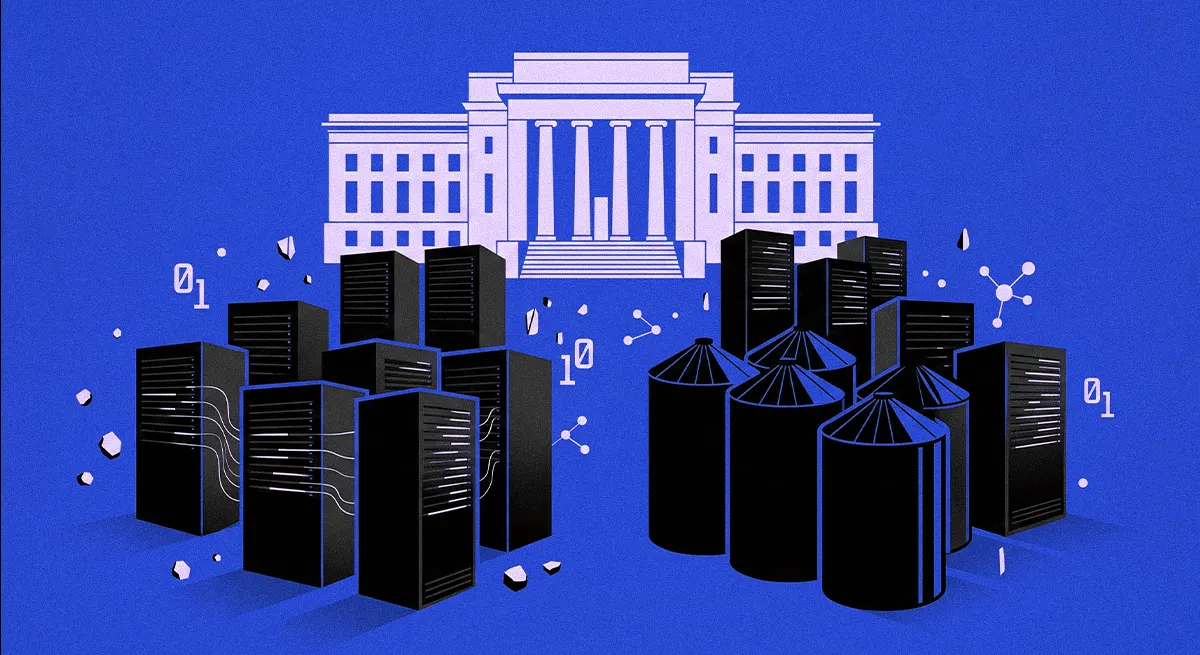

For 50 years we've built government's IT systems with the applications at the center, data itself an afterthought. AI is finally forcing that correction because an AI agent is only going to be as good as the data that it can actually understand.

The U.S. government buys more IT than any other entity on Earth — and that scale means when it moves, its purchasing power sets standards the rest of the market tends to follow. Right now, government is running headfirst into the same wall private-sector enterprises have already hit: application silos built for a world where data quietly followed the app that created it.
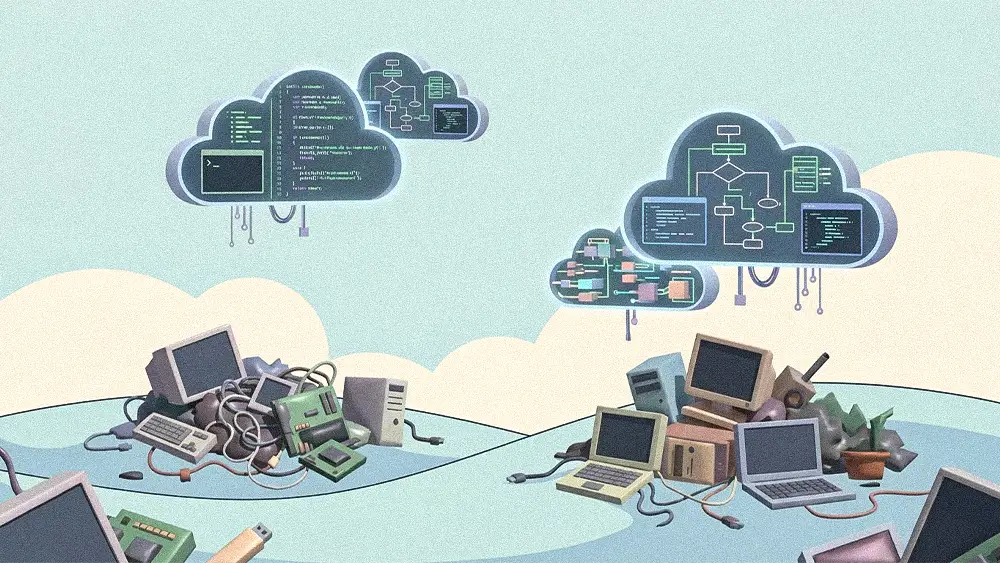
For 50 years and like the enterprises that support them, government agencies built IT systems around application silos, discrete tools bought to solve discrete problems, each generating its own copy of data with its own definitions, formats, and access controls. That model worked when human analysts were the primary consumers of information. It breaks down when AI agents need to nimbly move across dozens of systems at once to produce useful results.
That’s what makes the federal government’s data architecture struggle a market-wide bellwether rather than a bureaucratic footnote: it’s not a story about one large, slow-moving buyer. It’s a preview of what every organization with decades of application-centric IT is about to hit.
Bill Wright is Head of Government Affairs at Everpure, where he translates the company's data-centric technical framework into federal policy. Before joining Everpure, Wright served as Staff Director on the U.S. Senate Homeland Security & Governmental Affairs Committee, held senior operations roles at the ODNI's National Counterterrorism Center, and worked as Special Assistant to the Coordinator for Counterterrorism at the State Department. He also led global policy efforts at Elastic and Symantec.
"For 50 years the government has built IT systems with the applications at the center, data itself an afterthought," says Wright. "AI is finally forcing that correction because an AI agent is only going to be as good as the data that it can actually understand."
Definitions that don't travel
The inconsistency starts with something as basic as a shared vocabulary. The word "customer" in a sales system often refers to a different object than "customer" in billing. Multiply that mismatch across hundreds of applications and reconciliation becomes a constant, manual burden. In government, the stakes sharpen because those fragmented records often represent real people.
"The same individual is a record in one agency and then you go over to the other agency and they're just a case number, and in the third one they're defined as a beneficiary," Wright says. A veteran's information takes one shape at the VA, another at the Department of Defense, and something different again at HHS. Each reconciliation cycle generates duplication, and each duplicate expands the digital attack surface.
That fragmentation also undermines AI readiness. Agencies can announce pilots, but if the underlying data can't be understood consistently across systems, those pilots sit on an unstable foundation. Wright argues that federal modernization funding should reflect that reality. "They need to do a better job of funding the foundation," he says, "not just the demos that are sort of on top of it."
Data primacy as operating principle
Wright sees a significant opportunity for governments to realign themselves around Everpure’s vision of data primacy. This framework is built around three fundamental shifts in how organizations handle information.
The first: definitions should travel with the data rather than living inside individual applications. A record should carry the same meaning whether an AI agent reads it in one system or in three others. That consistency is what makes AI outputs auditable and defensible, which matters enormously in a government context. The second: organizations should conserve data instead of copying it. One governed, well-described source serves everyone, cutting the duplication that drives up cost and introduces error. The third: governance should sit at the data layer, not the application layer.
That last shift addresses a structural gap in how most agencies currently operate. The legacy model ties access controls to individual applications, but AI agents can query dozens of systems at once. That kind of lateral movement is exactly what application-level controls weren't designed for. "Agencies have a fiduciary responsibility to protect data and access has to be contextual. It has to be based on the data itself, who's asking it and why they're asking it," says Wright.
The private sector has been hitting this wall for some time. Enterprises working to move AI from pilot to production are encountering their own versions of fragmented definitions, duplicated records, and governance models built for human-speed workflows. Given the government's outsized purchasing power, Wright sees its pivot toward data primacy — and the standards it sets in pursuit of it — as a potential blueprint for how the broader commercial landscape addresses the same problem.
The cheapest watt you never generate
Behind the architecture debate sits a growing infrastructure pressure point. AI compute and cooling represent the largest power draws at data centers, and energy consumption tied to these workloads is projected to grow sharply through the end of the decade. Communities nationwide are starting to feel the impact. During a recent visit to New Jersey, Wright sat next to county commissioners who flagged data center expansion and local energy affordability as top constituent concerns.
Everpure sees examples where storage can account for up to 25% of the data center power draw, a smaller slice than compute or cooling, and Wright doesn't claim storage alone will solve the grid challenge. But efficiency gains across all three categories compound. "The cheapest watt of energy is the one that you never have to generate," he says. Federal policy can accelerate that correction by linking grants, tax incentives, and procurement rules to measurable energy reduction benchmarks rather than simply funding more capacity.
The gap between voluntary commitments and actual enforcement makes that policy lever more urgent. Hyperscalers signed a White House pledge in March to cover their own power costs and keep them off household bills, but there's no enforcement mechanism behind the promise. Wright sees that gap as precisely where demand-side efficiency standards can do real work, rewarding organizations that reduce consumption rather than subsidizing continued expansion across an already strained grid.
With Congress largely gridlocked on comprehensive legislation, much of the near-term policy work is happening agency by agency, even as Wright continues pressing lawmakers directly. He plans to spend the coming months bringing the data primacy framework both to policymakers on Capitol Hill and to the agency and executive-branch leaders shaping day-to-day implementation. "If there's one truism in Washington, it's that innovation will always outpace public policy," he says. "But when government does move and set the blueprint, the impact reshapes the surrounding commercial landscape far beyond the agencies directly involved."