
The Next Phase of Financial Innovation Starts with Smarter, Data-Literate Regulation
Gary Palmer, CEO of Payall Payment Systems, explains why regulators often struggle to regulate the financial industry and how the challenge introduces new risks.


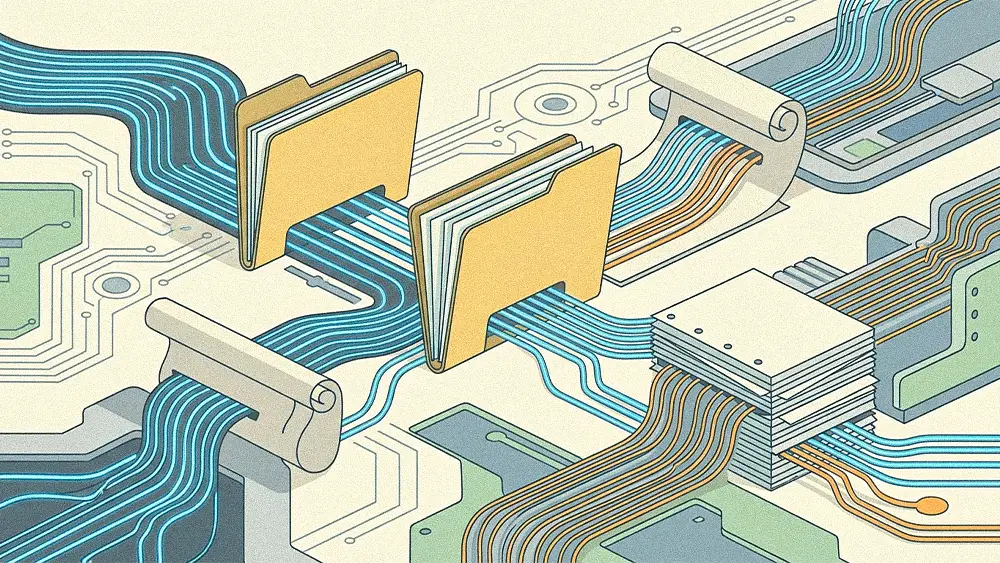
Today, regulators ask banks to prove compliance by pulling endless folders of transactions and checking a minuscule fraction of them. It’s a process built for a world of paper, not code. Instead, banks should be able to digitize their rules, and regulators should have the tools to instantly verify that those rules were actually executed.

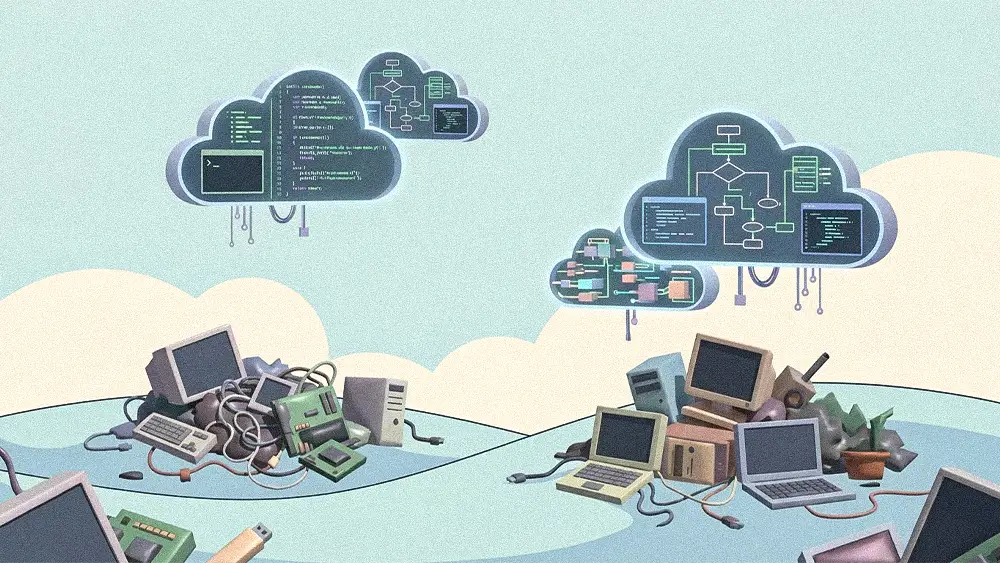
Across the world, regulators are trying to keep up with financial systems that no longer wait for them. Banks, payment providers, and fintechs now move at the speed of software, while their overseers still work in PDFs and policy binders. The result is a growing infrastructure mismatch in which innovation runs in real time and oversight lags on paper.
Gary Palmer knows the system from both sides. As Founder and CEO of Payall Payment Systems, the first cross-border processor for banks, and a 20-year advisor to the Federal Reserve Bank of Philadelphia’s Consumer Finance Institute, he's watched innovation outpace regulation in real time. Palmer says that while most regulators genuinely support progress, their analog-era frameworks simply can’t keep up with the surge of digital applications.
"Today, regulators ask banks to prove compliance by pulling endless folders of transactions and checking a minuscule fraction of them. It’s a process built for a world of paper, not code. Instead, banks should be able to digitize their rules, and regulators should have the tools to instantly verify that those rules were actually executed," Palmer says. The issue is a breakdown of infrastructure, he explains. Here, innovation is moving faster than the systems built to oversee it.
Mind the gap: The problem arises when these institutions are confronted with overwhelming volume. Palmer explained that when oversight depends on paper, the system collapses under scale. "A regulator might process 20 bank applications in a year, but once digital licensing opens, that number can surge to 2,000 eMoney applications. There’s no way to manually keep up. The resources and time simply aren’t there." What once worked for a small number of institutions now buckles under the weight of a digital economy moving thousands of times faster.
The linchpin of the solution is a new software stack for regulators. With modern tools, financial institutions can digitize their compliance rules, and regulators can verify that those rules are consistently implemented, all without accessing sensitive consumer data. Unlike other approaches, this one offers transparency for the process, while protecting the underlying data.
Paper-thin proof: It could even replace traditional oversight models built on periodic, manual spot-checks, a system Palmer describes as fundamentally broken. By shifting from manual audits to automated verification, technology makes oversight faster and fundamentally safer, he says. "If regulators had real-time proof that every customer dollar was safeguarded, they wouldn’t need insurance as a safety net. Absolute transparency would make the system faster, safer, and far less costly for everyone involved."
The concept isn't just a theory, as global regulators are already testing similar models. "By providing the right infrastructure to innovators, they will come," Palmer notes. Instead of deregulation, however, his goal is a smarter, data-literate form of regulation. To govern a financial system that runs on code effectively, he believes governance itself should learn to speak the same language. When central banks and fintechs can operate on shared compliance schemas and live audit trails rather than PDFs and on-site inspections, Palmer concludes, only then can regulation evolve from a bureaucratic hurdle into a core part of modern financial infrastructure.