

Incomplete or inaccurate data doesn't just deliver poor outputs. It could introduce catastrophic risk to the mission and result in real-world tragedies.
 Katherine HennesseyHead of U.S. Government Strategy @ Everpure
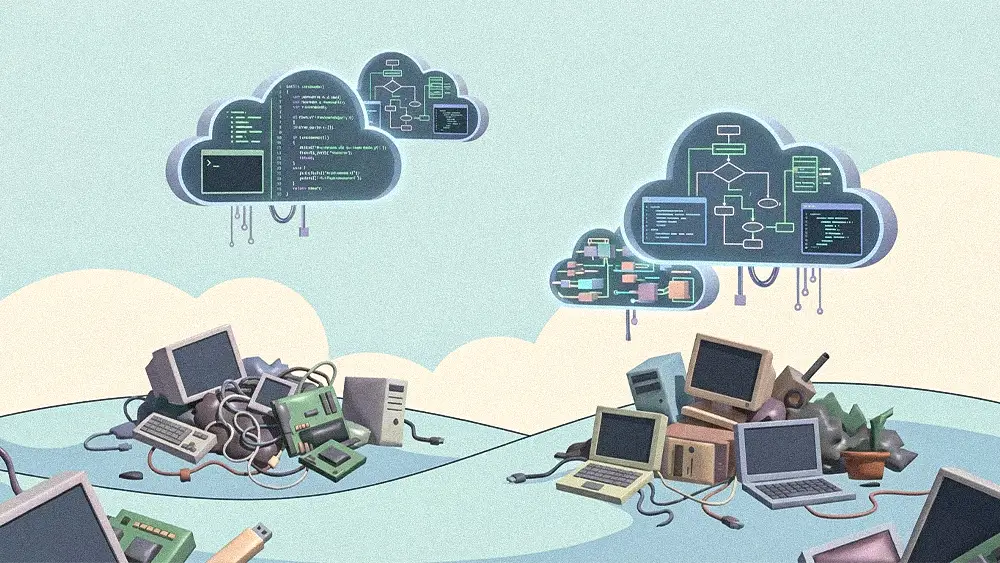
If AI is to deliver for government mission owners, data readiness is the non-negotiable first step. The U.S. government wants, and needs, to utilize artificial intelligence (AI) to further its missions, from citizens services to autonomous defense systems. AI empowers agencies to achieve unprecedented efficiency, speed, and decision-making superiority, unlocking capabilities that were unimaginable just a few years ago But, across the federal landscape, data sits in legacy storage, fragmented across cloud environments and siloed at various agencies—exactly the conditions that prevent AI from working optimally, or at all.
Katherine Hennessey is Head of U.S. Government Strategy at Everpure, whose enterprise data cloud provides a unified data and management plane, and supports hybrid cloud infrastructure across commercial and government environments. Before joining Everpure, she spent five years at NightDragon, a national security and defense-focused venture capital firm, leading government services. Her background includes professional staff roles on the U.S. Senate Committee on Appropriations, faculty positions at Georgetown and Rice, and a senior fellowship at Auburn University's McCrary Institute for Cyber and Critical Infrastructure Security. She frames a critical federal AI challenge as a data management and governance problem that no foundation model can solve on its own.
"The government needs to implement AI, but we need to be realistic about the hurdles that it faces in optimizing that data to support AI," Hennessey says. "Incomplete or inaccurate data doesn't just deliver poor outputs. It could introduce catastrophic risk to the mission and result in real-world tragedies."
Data unification is a national security requirement
The evolution from Joint Enterprise Defense Infrastructure (JEDI) to Joint Warfighting Cloud Capability (JWCC) taught the government a critical lesson about the dangers of entrusting data to a single provider. Ironically, this pivot away from a single-vendor approach happened back when we were only just beginning to grasp the true value of that data and the analytical capabilities required to unlock it. Now that we're in the AI era, we shouldn't have to relearn these lessons. All agencies want to harness the power of AI, but effective implementation of AI isn’t only dependent on which foundation model they choose. It's also based on how difficult and expensive it is to move that data from cloud providers to foundation models, and then back to its own control if the agency later moves in a different direction. The question of who actually owns and governs that data becomes central to whether agencies can implement AI effectively to meet their missions, or whether it ends up locked into cloud providers’ ecosystems.
"You want to create an architecture that lets you hold your own data, ensure continuity of operations, and then choose the foundation models that are best for your mission," Hennessey says. "A scenario in which the Department of War (DoW) is beholden to one of the frontier model companies is problematic because they then have control over the data you give them, and getting it back out may not be so easy."
The Golden Dome missile defense program represents a near-term test case. Golden Dome is a planned U.S. homeland missile defense initiative designed as a multi-layered, AI-driven shield that integrates real-time sensor data across all domains—sea, air, land, space, and cyber—to detect and destroy advanced ballistic, cruise, and hypersonic threats. At its full scope, Golden Dome intends for there to be data-sharing amongst military services that have historically struggled to share data effectively. "We have to envision a world in which Golden Dome unifies data across air, space, land, and sea," Hennessey says. Without this unified data layer, aggregating the vast sensor telemetry across disparate service-owned programs and achieving true multi-domain interoperability remains an elusive goal.
AI will fail without a modern data infrastructure
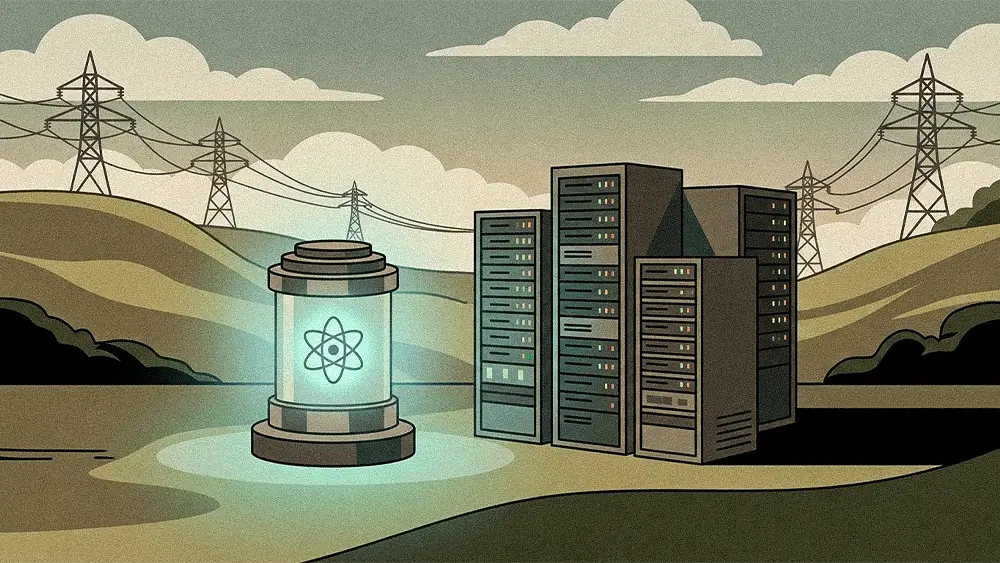
Beyond the specter of vendor lock-in, the path to a unified data plane is frequently obstructed by the rigid economics and inefficiencies of legacy infrastructure. By shifting to flexible, high-efficiency architectures, such as hardware-as-a-service or pooled compute and storage resources to offset supply chain cost increases, agencies can finally decouple their operational capacity from these fiscal and physical constraints. This transition to modern data infrastructure can slash power consumption and reduce physical footprint by orders of magnitude. It also creates the high-speed, portable foundation required for true multi-domain visibility. Ultimately, modernizing data infrastructure for defense agencies extends far beyond equipment upgrades. It is a strategic necessity, building the resilience and agility required to scale AI and sustain mission success in an increasingly unpredictable global environment.
Everpure Data Cloud allows agencies to manage their data on their own terms, establishing a unified data plane that delivers the efficiencies and cross-domain capabilities described above. By enabling full sovereignty and control, Everpure prevents data from becoming locked within proprietary cloud ecosystems or surrendered to third-party models. This platform empowers agencies to maintain data with near-zero friction while ensuring the high availability required for mission operations, ultimately providing a governance-first foundation that scales seamlessly with AI initiatives.
"A modern data infrastructure that can support AI goals of our government faces some hurdles, which include policy and cultural hurdles. But if that data exists and can be managed the way I've described, then implementing analytics, orchestration, and AI technologies becomes much easier." The data layer, in Hennessey's framing, becomes critical to the program’s success, and makes the ecosystem interoperable. “Without it, every new capability faces the same integration friction," she says.
Data silos stifle innovation
The defense innovation community grapples with a phenomenon called the 'Valley of Death.' This refers to the critical gap where innovative startups and prototypes fail to transition into official programs of record or secure long-term production contracts because the DoW’s funding cycles move too slowly, causing companies to run out of capital.
Hennessey is all too familiar with the challenge of getting the government to adopt and scale the innovative technology it needs, given her past work with defense startups. "At its core, the Valley of Death exists when investors cannot validate that a company can scale from pilots to production contracts at DoW. It then becomes difficult for those companies to obtain capital to grow in order to scale to compete for the defense programs of record. It’s a chicken-and-egg problem," Hennessey says.
But, as Hennessey points out, data silos within the DoW directly contribute to the Valley of Death. When critical data is trapped in isolated enclaves, the smaller innovators can be locked out, unable to access foundational information required to design next-generation solutions. Data silos therefore can act as a formidable barrier to entry for the very tech companies we need most and stifle innovation at those companies. To solve this, we must shift our focus toward unifying our data while governing it robustly, ensuring it remains a secure, sovereign asset rather than blindly turning it over to AI models. By establishing a unified, governed data environment, we can democratize access for young, innovative companies, empowering them to build, iterate, and deliver the cutting-edge capabilities necessary to maintain our strategic edge.
Siloed and inefficient data infrastructure directly threatens our ability to implement AI, thereby jeopardizing critical strategic priorities like the Golden Dome initiative and the essential need for sustained innovation. This disconnect undermines program goals and delays the progress required to secure our future. Given the profound national security implications and the significant taxpayer investment at stake, we cannot afford to wait. Fortunately, these technical barriers are surmountable today; we do not need to search for a breakthrough. The technologies to unify our data, remove these obstacles, and ensure mission readiness exist, are proven, and are ready to deploy.