

Just don't assume that it's right or that it hasn't been hacked in the meantime.
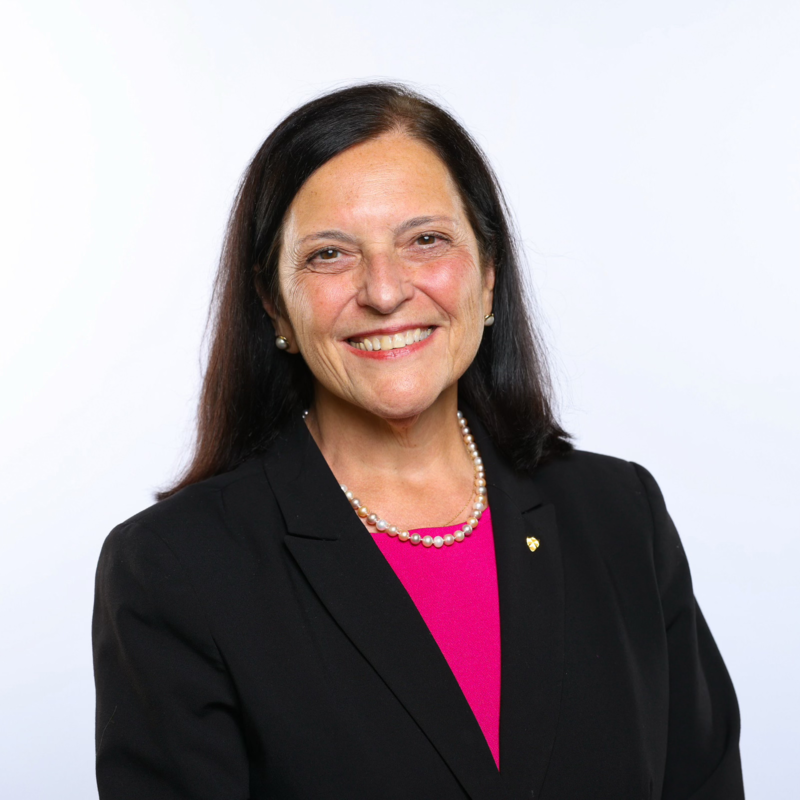 Florence HudsonExecutive Director of the Northeast Big Data Innovation Hub and Interim Executive Director for Sponsored Research, The Data Science Institute, Columbia University
A record that looked clean the day it entered a system says little about whether it's still accurate today. Data can be altered after ingestion, and documentation can fall out of date or drift away from the data it describes, often without any alert. Keeping that data trustworthy depends on a habit of questioning information an organization already relies on, paired with infrastructure that holds enough context to test those questions against. For organizations putting AI to work on that data, the pairing becomes a governance responsibility that lasts as long as the data stays in use.
Florence Hudson, Executive Director of the Northeast Big Data Innovation Hub and Interim Executive Director for Sponsored Research at Columbia University's Data Science Institute, boils that responsibility down to three letters. An aerospace and mechanical engineer by training, she leads the COVID Information Commons, a National Science Foundation-funded portal for pandemic research, and chairs the IEEE working group behind a standard for securing connected medical devices. When she speaks to executive audiences who won't hold onto the technical details, she gives them an acronym: ABS. "Always be suspicious," she says.
Ongoing human vetting
On a Royal Society of Medicine podcast, the hosts recast her phrase as "always be vigilant," a version Hudson happily accepted. She compares it to the hesitation a person feels in a city before turning onto a street that doesn't look right. "That's why you have to have humans in the loop to look at this stuff and vet it constantly," she explains. "Just don't assume that it's right or that it hasn't been hacked in the meantime."
Hudson recalls a California university whose research data was hacked during the pandemic, and she warns that compromised research data can undermine the recommendations drawn from it. "Then you're making decisions on bad data and you could be hurting people," she said. A similar risk follows enterprise data into settings where agents act on messy data with less human review than an analyst once gave a quarterly report.
Hacked data goes unnoticed unless someone is assigned to look for it. Hudson wants risk managers, people or systems, put in charge of confirming data is used correctly and checking it again after it arrives, a practice she calls responsible data science. "That's why we need adult supervision," she adds.
Preserving data context
Being suspicious of data only works when the infrastructure has kept enough context behind it to check against. When Hudson's team built the COVID Information Commons, the working assumption was that the pandemic would wind down within a year or two. She guessed the portal might eventually hold around 2,000 research awards, a figure that has since grown to roughly 14,000. "I like to create a base that can grow," she says, and the team had built with that in mind. The volume still forced a redesign. "We had to re-architect it," she recalls, describing how the team looked back to the 1918 flu pandemic and recognized it needed to plan for a much longer horizon.
Preserving data means preserving enough context for future users to interpret it correctly. That's important for researchers returning to old studies, and it carries into AI systems that retrieve and connect information across datasets. The Commons pairs its data with metadata, and Hudson says it links to more than 4,000 related datasets so users can see the broader research context. The team archives a full export each year in the Dryad repository, and 95 researchers contributed 24 chapters to a companion book covering the outcomes of their NSF- and NIH-funded work along with their recommendations for future pandemics. It's a research-world version of the case for letting meaning travel with the data, so a record stays interpretable after it leaves the system that produced it.
Hudson is carrying those lessons into the National Academies' Resilient and Enduring Data Infrastructure initiative for biomedical and life sciences research, where the systems architect who helped build the Commons is also a member. "You look over your shoulder and say, yeah, that happened," she says. "You ground your feet where you are and you look forward and say, okay, where are we going? And how do we make it as good as possible?"
Security belongs in the first design
Hudson rejects the idea that security strangles the value of data, calling it "a red herring." Her approach is to sort data by what can be shared and on what terms. "What can I share? What shouldn't I share? What do I have to ask before I share? How long can I share it?" she said. "I look at it as enabling and then doing what we call responsible data science." She ties that to the personal stakes of sharing. "When you share someone's data, you're creating risk," she says, noting that a medical record is worth far more on the dark web than a Social Security number.
Her engineering background shapes how early that thinking has to start. She remembers a design-class peer who presented what he called the perfect airfoil, pulled from a reference book. Hudson asked whether it worked with the tail, and when it didn't, he wasn't bothered. "It's all a system of systems," she explains, which means considering every requirement from the beginning. For data, that includes sovereignty and regulations that differ by country, along with protections that follow residents of certain regions wherever their data goes. AI agents call for that early planning too, since governance before the first deployment sets the limits on what they can reach.
Hudson's working group wrote that systems view into IEEE/UL 2933, the award-winning standard for clinical Internet of Things devices and data, which rests on a framework called TIPPSS, short for trust, identity, privacy, protection, safety, and security. The standard started with connected medical devices, where a hack can be lethal, and her group is now extending the framework to energy grids and research infrastructure. TIPPSS treats each of those requirements as part of system design, so the protections that keep data trustworthy are built into the architecture from the start.
"They need to think of who's cleaning the data," Hudson says of organizations that hold it, "who's checking to make sure it didn't change again."