


Moving data is the bottleneck of the AI workload. It makes the difference between a system that is very efficient and one that is not.
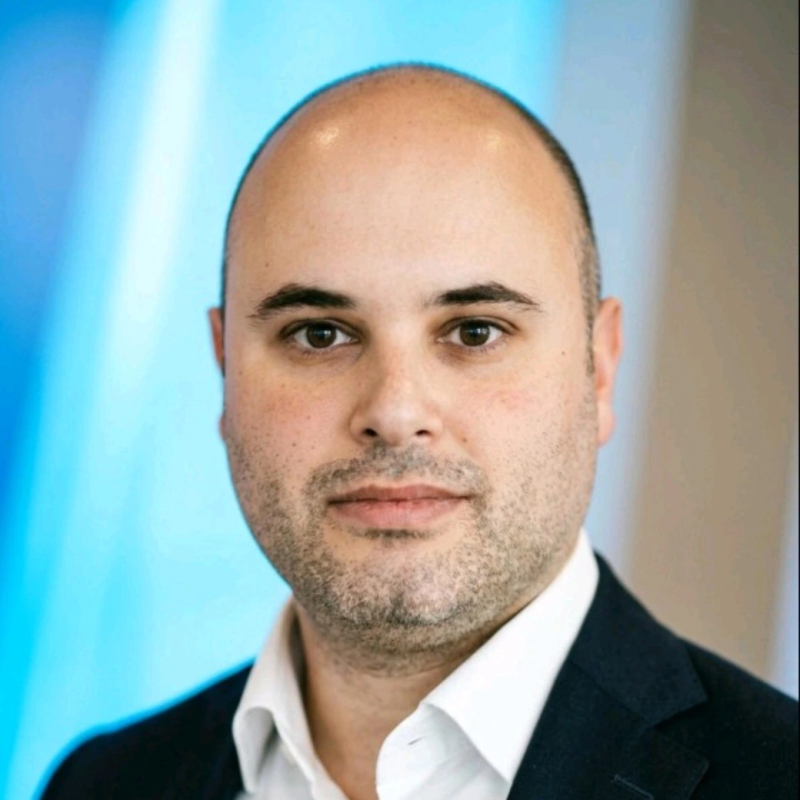 Daniele CesariniHead of AI/HPC Architecture, CINECA
At supercomputing scale, AI runs on enormous amounts of data, often petabytes at a time. Moving that data between storage and processors takes time, and while it travels, expensive computing power sits idle. That’s why the people designing Europe’s shared AI infrastructure now put data and compute as close together as possible. As these systems take on more enterprise AI work, that data also has to meet much stricter security standards.
Daniele Cesarini is Head of AI-HPC Architecture at CINECA, a public consortium of Italian universities and research institutions that operates national supercomputing infrastructure in Bologna. He leads architecture strategy for CINECA’s AI and HPC platforms, including the infrastructure design for IT4LIA, Italy’s AI Factory co-funded by the EuroHPC Joint Undertaking. Before moving into the role, he spent more than six years as a project manager and HPC technology specialist at CINECA, where he helped architect and deliver Leonardo, one of Europe’s pre-exascale supercomputers. He has also held roles within EuroHPC and ETP4HPC, the European Technology Platform for High-Performance Computing, contributing to Europe’s AI and HPC roadmap.
“Moving data is the bottleneck of the AI workload. It makes the difference between a system that is very efficient and one that is not,” says Cesarini. Enterprises building their own AI infrastructure face the same pressure on a smaller scale, since every delay in the data path adds to the cost of compute they’ve already paid for.
Built around the data
Supercomputing centers have traditionally served science, running lengthy simulations in fields like condensed matter physics, nuclear fusion, astrophysics, geophysics, and materials science. AI is reshaping that mix quickly. At CINECA, AI went from a negligible share of the workload to nearly half in about three years. Across Europe, the EuroHPC Joint Undertaking is funding a network of AI Factories and planning larger AI gigafactories to expand capacity further. These systems serve researchers, startups, and large enterprises alike.
Demand for AI compute is still growing faster than new capacity can come online, and funding and power supply limit how quickly operators can build. “It is something I have never seen in my life, such a big increase in demand for computing capacity. We are trying to keep up as much as we can,” says Cesarini.
With expansion that slow, operators are trying to get more out of the systems they already have. Increasingly, that means rethinking where data is stored. Architects are building large data centers around one big system and placing processors right next to storage, so AI training jobs don’t stall waiting for data. “We pack as many accelerators as possible very close to our data lake in order to reduce data movement as much as we can,” says Cesarini.
Operators with more than one site can’t keep everything in one place, so they also need fast connections between locations. Over the past year, CINECA linked its three data centers with dedicated fiber that moves hundreds of gigabits per second. Speed matters most during large-scale model training, when a slow flow of data can keep a large system from performing at its best.
Speed meets scrutiny
As supercomputing centers open up to business users, the same machines now serve two very different groups. Researchers running scientific experiments can usually tolerate long queues and some swings in performance. Enterprise customers expect fast turnaround and consistent results. They also want proof that their data is protected, often through formal certifications. In Italy, that can include ISO certification and accreditation from the National Cybersecurity Agency.
That’s a big change for facilities designed around raw speed. “In our old systems, we had relaxed constraints on security in order to speed up performance as much as possible. Today, enterprise AI customers require very high performance but also very high security,” says Cesarini.
Meeting both needs starts with how data is stored and accessed. Traditional supercomputers typically rely on one very large file system built for speed. Enterprise AI users need more from it. Each customer’s data has to stay separate on shared hardware, and teams want to reach the same data as both files and objects. That data also has to be encrypted, whether it’s sitting in storage or moving to compute. A file system designed only for speed can’t handle all of that on its own, which turns data management into a long-term project. “We spent the last three or four years thinking about data management in our infrastructure,” notes Cesarini.
Sovereignty starts small
AI sovereignty is a growing priority for Europe. “Sovereignty is a very big word in Europe today. It is also a very complex word,” says Cesarini. He breaks it into several layers, some much harder to reach than others. The first is ownership, with European organizations running their own AI services and controlling their own data.
Models come next. EU-funded projects are building large language models meant to compete with the world’s top systems. Hardware is the hardest piece. Only a handful of companies make efficient AI chips, and catching up takes billions in investment. A few European companies are now developing their own, and CINECA is working with them to build and test an early AI system that runs entirely on European technology, from the chips up to the models.
European chips and models will take years to mature, but decisions about where data lives and who controls it can be made today. Those early choices shape every layer that comes after. “It is not something that will happen tomorrow or next year. It will definitely take years. But today it is not possible to get out of the AI race,” says Cesarini.