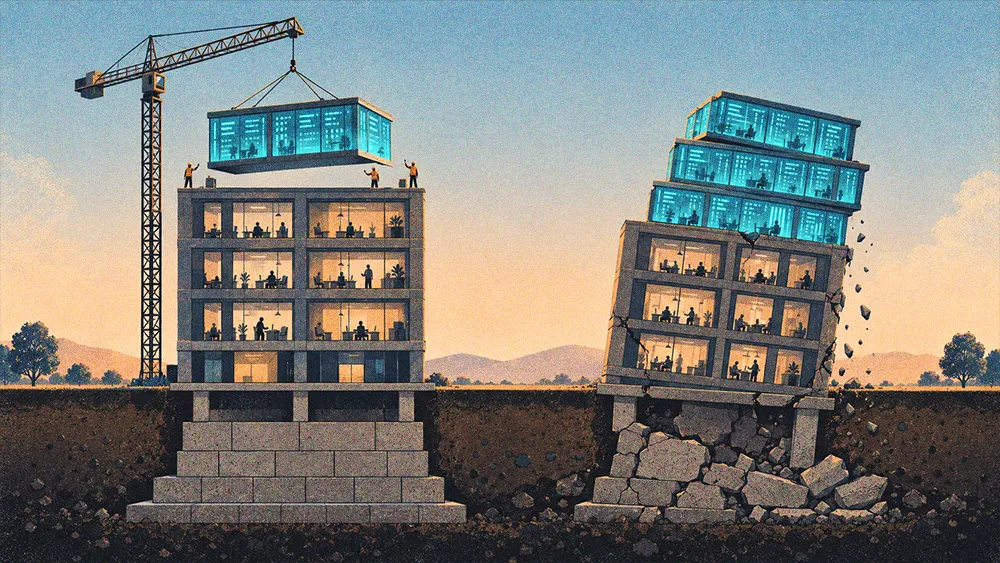

Where we're at today is because of the human brain. And where we're going to end up tomorrow is because of the human brain. It's not because of AI.
 Nabeel MahmoodCo-Founder and CEO @ Nomad Futurist Foundation
Every megawatt of AI capacity under construction assumes a supply of electricians, pipefitters, controls engineers, and commissioning specialists that doesn't yet exist. Capital isn't the constraint. Land isn't the constraint. The constraint is a workforce the industry spent two decades recruiting from and almost no time building. The projects get announced anyway, and the people who have to energize, cool, and maintain them are being sourced from a pipeline that was never designed to feed this sector at this speed.
Nabeel Mahmood is a technology executive, futurist, and Co-Founder and CEO of the Nomad Futurist Foundation, a 501(c)(3) that works to demystify digital infrastructure for students and career changers. His career spans CITO roles, board directorships, and two decades inside global technology organizations. He has previously discussed the physical constraints that determine whether high-density environments actually run. On a recent episode of The Data Wire's Beyond the IT Headlines podcast, Mahmood made the case that the labor side of that equation is the one the industry keeps deferring.
The demand curve nobody staffed
The public conversation about AI and employment runs in one direction, toward what gets eliminated. Mahmood's read of the data runs the other way. Korn Ferry's Future of Work research projects a global talent deficit of more than 85 million workers by 2030, concentrated in exactly the knowledge-intensive and manufacturing sectors that AI infrastructure depends on. Mahmood cites the figure often, and he's specific about what those roles look like.
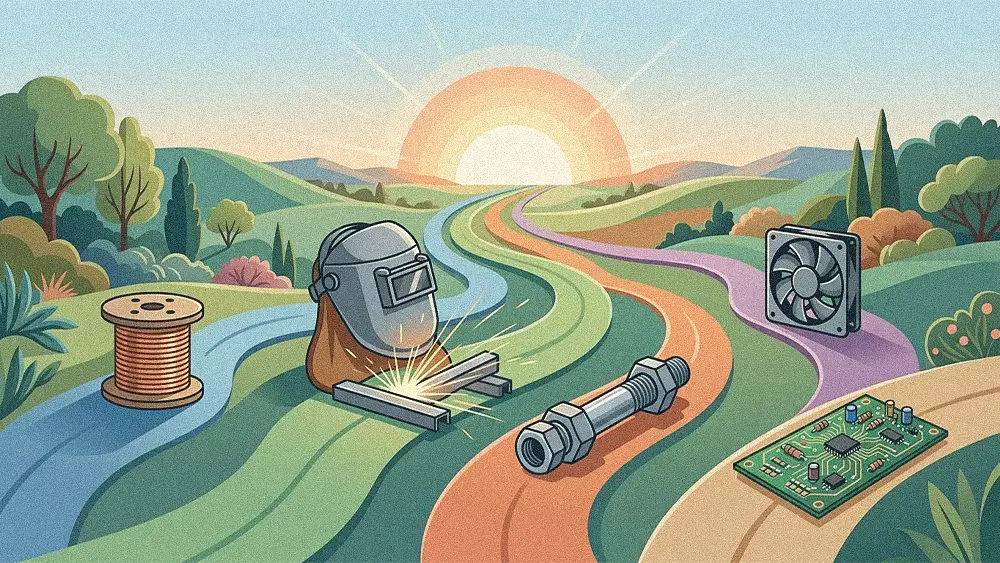
"We are entering into a phase where a different set of skill sets are needed," said Mahmood. "We need metal fabricators, we need people that can build chillers and air conditioners and air handlers and electrical mechanical equipment servers." Those categories map directly onto current hiring pain. Demand for trade workers tied to data center construction has outpaced supply badly enough that recruiters now describe specialized talent, rather than chips or capital, as the real ceiling on build-out speed.
What the build-out leaves behind
Part of the recruiting problem is reputational. Mahmood argues the sector has let others write its story, and the version that circulates is one of extraction rather than construction. He pointed to the rural communities in Oregon and Washington that hyperscale campuses landed in fifteen years ago, places that had more cattle than residents.
"They built roads and byways, they provided connectivity, they cleaned out water, they built animal shelters," said Mahmood of the operators who moved in. "Quality of life that did not exist in those cities before." Those towns are now cities with modern infrastructure, and the through line matters for hiring. A high schooler who has only encountered data centers as a story about water usage and land grabs has no reason to picture a career inside one.
Exposure before curriculum
The Foundation's answer is physical. Rather than running awareness campaigns, it takes students into facilities, semiconductor plants, thermal management shops, and metal fabrication floors, and lets the environment do the recruiting. One recent group of about 60 students asked to see the data center that hosts Roblox, a platform they use daily and had never thought about as a building full of equipment and people.
"The first touch point really is to take them out to these facilities to expose them to what the world is behind the curtains," said Mahmood. He compared it to walking a dealership lot, where the click comes from proximity rather than a brochure. What students look for once they're inside is rarely technical. "What they're really looking at is, okay, do I have a similar background, similar experience, similar schooling. And then you start connecting these dots."
That model reflects a broader conviction about how credentials work now. "Education is not necessarily going to go get a degree from a college. It's based on exposure, experiences, and opportunities." The Foundation has since committed to a free training platform open to anyone globally, built on the same premise that access, not admission, is the gating factor.
The pipeline starts before the job opening
Mahmood sees the range of possible entry points in his own family. His son left college for aviation but remains interested in weather models and travel technology. His 17-year-old daughter is drawn to the regulation, policy, and standardization of compute. Their paths support his larger point: the industry cannot recruit only for predefined technical roles. It has to expose young people to the systems behind their digital lives and let them discover where they fit.
That approach will not resolve the immediate labor shortage. Data centers being built on schedules measured in months depend on a workforce that takes years to develop. But Mahmood argues that the industry has spent too long drawing from that workforce without replenishing it. Nomad Futurist now operates across six continents and is building a free educational platform intended to turn early exposure into durable career pathways. "If we expose them to opportunities and the idea of innovation, they’ll find their swim lane," said Mahmood.