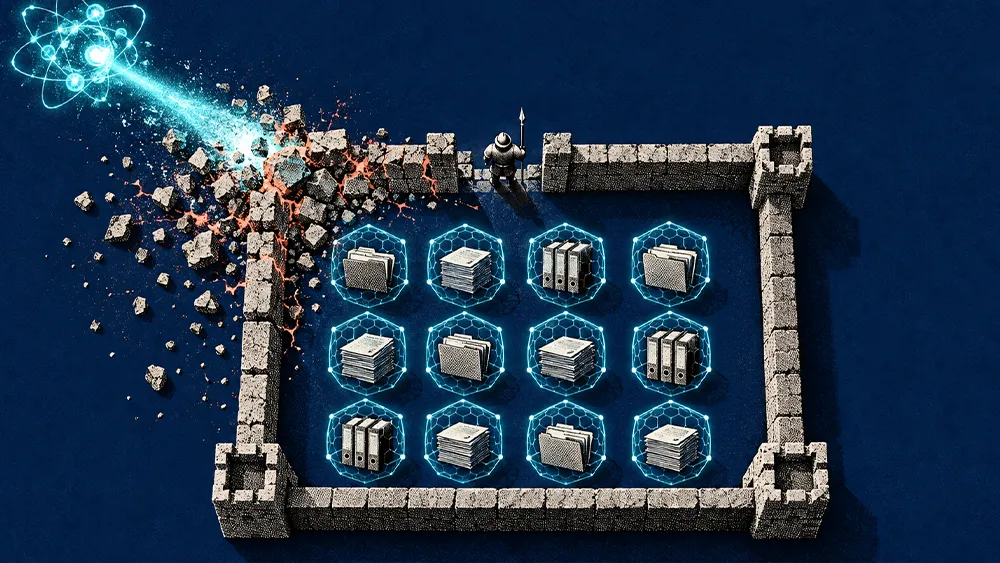
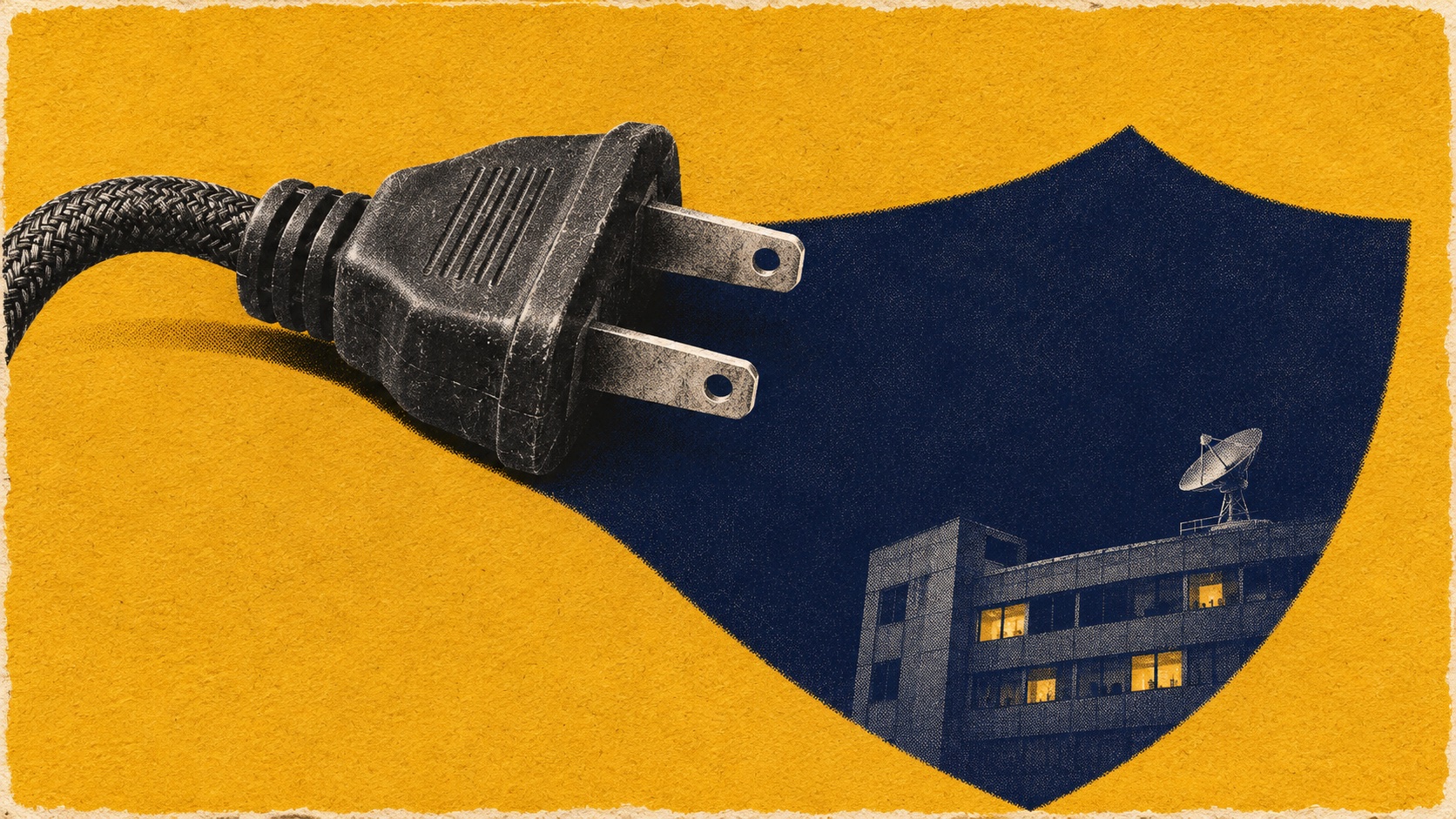

In a single week in November, a widespread systems incident disrupted business-critical capabilities across dozens of countries, and a data flooding incident grounded every departing flight in the United States. Subsequent disruptions affected both the banking industry and government agencies. Officials have said they saw no evidence of a coordinated attack, and the causes cited were mostly upgrades, configuration changes and patching. That is exactly the point. When a routine upgrade or configuration change can do what an adversary would try to do, the question for leaders is no longer who caused the disruption. It is whether the system can take the hit and recover.
Modern national security increasingly depends on that kind of resilience: of military forces against inexpensive drones, of critical infrastructure against cyberattacks and sabotage, of alliances against geopolitical pressure, and of the technology systems governments depend on for intelligence, defense and economic competitiveness. Possessing advanced capabilities is no longer sufficient. Countries, utilities and agencies must also be able to protect those capabilities, sustain them through disruption, and restore them quickly.
Nowhere is that clearer than in critical infrastructure, where everyday public service and national security run on the same systems.
One grid, many missions
A hospital, a water treatment plant, a county emergency dispatch center and a military installation look like very different missions. Under the surface they often depend on the same things: the same regional power provider, the same water system, the same fiber routes, and the same data platforms keeping those services available.
Much of that infrastructure is privately owned and operated, with some of it run by state and local governments. The U.S. Department of War depends on utilities it neither owns nor controls. That dependency is sharpest where geography removes the backup plan: on an island or isolated service area there is no import path for power and little terrestrial redundancy for data. A disruption to the civilian system is a disruption to every mission that relies on it, whether that mission is a patient in an ICU or the readiness of a forward command.
That is why critical infrastructure is the connective tissue between public service and national security. It is not two problems with two budgets but instead one set of dependencies viewed from two sides.
Both are under attack
Adversaries have drawn the same conclusion. Public government advisories have described adversaries pre-positioning inside the networks of U.S. utilities, ports and pipelines, with the stated aim of complicating U.S. deployments in a crisis. Ransomware crews target hospitals, municipal governments and utilities because downtime is intolerable and ransoms get paid. The EU now sanctions cyberattacks, information manipulation and sabotage together as hybrid threats.
The lesson is that the civilian and the military are not separate targets. Disrupt the local grid or the regional health system and you have degraded the national posture without ever touching a defense network. Resilience has to be built where the dependency actually lives.
What resilience actually requires
Resilience is not a slogan, and it is not only a cybersecurity problem. It comes down to a handful of concrete controls and capabilities, applied to the data that critical operators rely on.
Recovery measured in minutes, not days. In a heat wave or a cyber incident, restoration speed is the mission. Operators should test full-scale recovery regularly, with large backups and virtual machines brought back quickly enough that the business of restoring service does not itself become the bottleneck. In one recent utility deployment, a full backup of about 25 terabytes that had taken hours completed in roughly 40 minutes.
Recovery you can trust, not just recovery. Assume the attacker is already inside. Attackers who pre-position want to corrupt or delete the data used to restore service, so operators need protected, tamper-resistant recovery points that can't be altered or deleted during their retention period. Anomaly signals from storage and threat scanning of protected data help identify a clean recovery point. Teams then restore it into an isolated environment, test it, and verify it before returning systems to production. That sequence cuts the risk of reinfecting the grid, the hospital or the plant you just brought back.
Always-on, non-disruptive operations. Critical systems cannot sustain a maintenance window during a crisis. Upgrades and expansion need to happen without taking data offline, so that uptime of the systems that monitor and control the grid is a design property rather than a hope.
Efficiency as a resilience feature. Modern metering infrastructure generates data every 5 to 15 minutes. One regional utility serving roughly 460,000 customers across a 10,000-square-mile territory was producing about 20 terabytes a month. Smarter data reduction brought that to about four, and shrank the storage footprint from two racks to roughly half a rack. Less hardware means less power, less cooling and fewer things to fail, which matters most where capacity is already constrained.
Simplicity that survives staff turnover and stress. Complex platforms need specialists, and specialists are scarce, especially at small utilities and local governments. Systems that a general IT team can operate reduce the risk of misconfiguration, which remains a leading cause of outages and breaches.
Supply-chain integrity. Governments now treat this as a shared problem. On November 15, the U.S. and nine partners signed the San Francisco Declaration, which counts energy, communications and the digital platforms that run them as critical infrastructure and commits signatories to working groups on supply-chain security and resilience. Operators should be able to say where their infrastructure comes from, how it is secured, and where their data resides, before an incident rather than after.
What leaders should do now
First, map the shared dependencies. Identify which of your critical services rely on the same power, water, network and data platforms as other missions, public or defense, and treat those as one risk register.
Second, test recovery against a realistic adversary, not a hardware failure. Assume the attacker is already inside and has targeted your backups.
Third, fund resilience as mission readiness. For many states, municipalities and utilities, security and recovery are discretionary line items. They should be treated as core to the mission they serve.
Fourth, as owners of critical infrastructure and operators begin treating compute, energy and data infrastructure as strategic assets, procurement decisions should prioritize operational resilience, cybersecurity, supply-chain security, and reduced dependence on foreign sources.
The takeaway
Possessing advanced capability is no longer enough. Nations, utilities, hospitals and agencies must be able to protect what they have, keep it running through disruption, and recover fast when it fails. The infrastructure that serves the public and the infrastructure that underpins national security are the same infrastructure. Defending one means defending both.