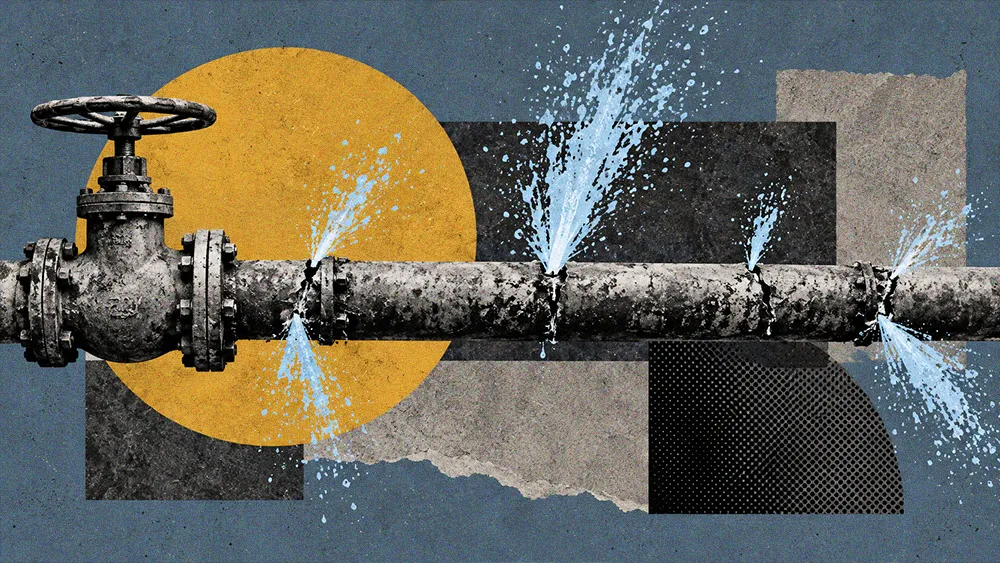
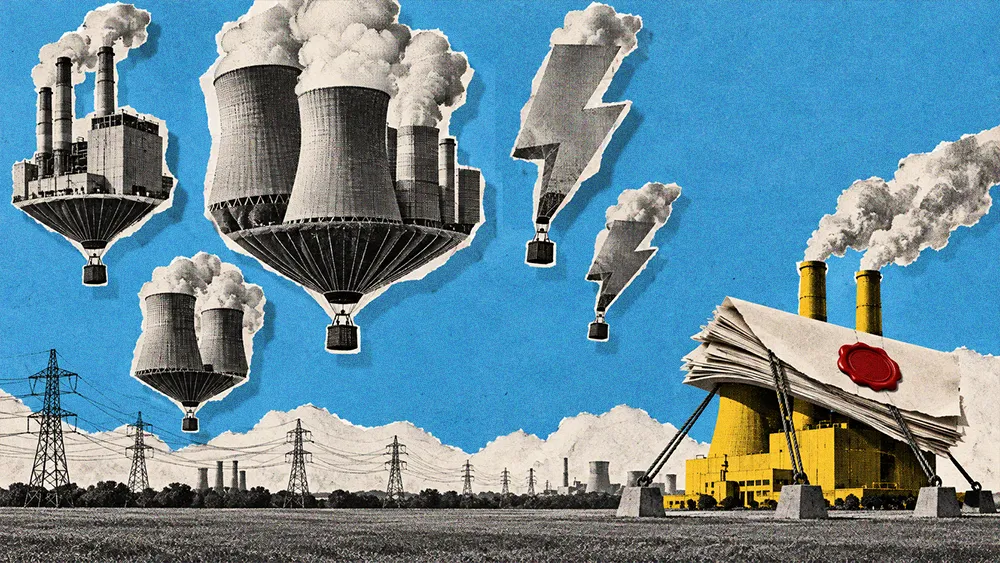
How do you know something's real in the power industry? You know it's real because you have a PPA with an investment-grade counterparty.
 Paul H. BarryUtility & Power Leader
The views and opinions expressed are those of Paul Barry and do not represent the official policy or position of any organization.
The gigawatt figures behind the AI buildout have taken on a life of their own. Hyperscalers publish capacity targets, utilities answer with generation plans running to tens of gigawatts, and equity valuations price in demand a decade out. A large share of that demand is still projection rather than commitment, and the distance between the two decides where billions in capital and years of lead time actually go. There's a clean way to tell the difference, and it has less to do with forecasting than with reading contracts.
Paul Barry is a long-time power and utility veteran and former Chief Development Officer whose career runs more than 30 years through senior finance, strategy, and corporate-development roles in the energy sector. He's worked both sides of the business, regulated and unregulated, new build and legacy generation, across coal, gas, nuclear, and renewables, and he now advises private equity funds on where to commit capital in power generation. That seat, nearer to the balance sheets and binding contracts than to the keynote forecasts, shapes a reading of the AI power boom that starts with one question.
"How do you know something's real in the power industry? You know it's real because you have a PPA with an investment-grade counterparty. Not an MOU, not a letter of intent, a binding power purchase agreement. That's about as real as it gets," Barry says. A power purchase agreement locks a buyer into paying for capacity and energy at a set price over a long horizon, often two decades, whether the power gets drawn or not. That commitment is what lets a developer hire construction firms and move capital, and once it's the measure, the headline numbers start to sort themselves.
What counts as real
His screen is arithmetic. Utilities and developers keep floating enormous capacity figures, and nuclear operators have begun signing dedicated supply agreements to serve single sites. "If someone says they've got 30 gigawatts of projects with hyperscalers, you ask how many are under PPAs. If the answer is one gigawatt, that cuts to the chase."
"People were bragging about the amount of capacity they were going to build, and they called it the 'merchant power meltdown,'" Barry says, pointing back to the Enron and Calpine era around 2000, when announced builds outran real need and companies went bankrupt chasing them. He hears the echo now. "Some of the numbers we're seeing could be 'bragawatts' that very well may not materialize."
Barry sees the valuations of major technology companies as another signal that investors expect AI demand to grow. "That's a lot of people putting a lot of money behind the thesis that this growth will materialize," he says. The market isn't all-knowing, in his view, but that much committed capital is a signal of its own.
Resistance and who pays
That optimism runs into a harder set of facts the moment the power has to land somewhere. Contracts settle whether demand is real; they don't settle whether a community will accept the load, whether the water is there, or how regulators will split the bill. Those fights are why energy has climbed into a leadership-level risk that sits with technology executives rather than facilities teams. And the states that courted the buildout first are now among the ones second-guessing it.
The pushback is no longer hypothetical, and it lands unevenly from one place to the next. "A northeast utility came out and said they don't want any data centers in their jurisdiction. What utility says that? It's like saying we don't want to grow." Texas, long the most accommodating market in the country, has turned cautious too, weighing the strain on water and whether the new load pushes up customer rates. With power itself now trading as a volatile commodity, the siting disputes and the rate disputes are starting to stack on top of each other.
Barry also distinguishes between two ways of financing new generation. Regulated, vertically integrated utilities may seek approval to include new plants in their rate base, spreading approved costs across customers through electricity rates. For generation developed by unregulated utility affiliates or independent power producers, he says, shareholders bear the investment risk instead.
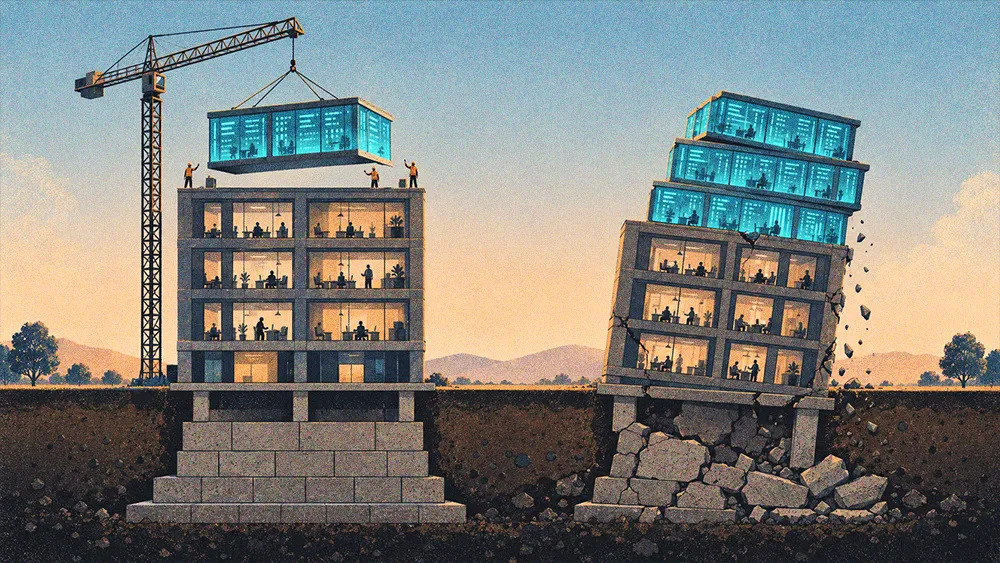
The mismatch Barry keeps circling is one of time. A power plant is built to run 40 or 60 years; a hyperscaler's need for any single site may not. "When you marry a shorter-lived customer to that supply, you have to ask what happens to the costs if they walk away. They become stranded costs, and nobody looks kindly on paying for them," Barry says. Utilities carried that exact load once before, recovering half-finished nuclear plants through customer rates, and the memory is part of why they're moving so carefully now.
Where the power comes from
Moving carefully on new build is not the same as the capacity failing to show up. It's arriving from a different direction than the greenfield announcements imply. The quickest path to usable power, Barry argues, runs through the infrastructure already standing rather than anything still waiting on a permit.
The capacity is coming from retrofits, not ribbon-cuttings. "You don't see people retiring coal plants anymore. They're restarting retired nuclear, the Duane Arnold plant, Three Mile Island. People are going to extremes to create generation capacity, because they believe it's a growth opportunity." His own thesis runs the same logic backward, buying aged units in dense, capacity-constrained markets precisely because the hard steps are already finished. "We're looking at aged generation in urban areas. It keeps running because it's critical for grid reliability, and it's a real repowering opportunity, the infrastructure is already there, including the permitting," Barry says. New build hits the same wall everyone hits: "If you wanted a new gas turbine today, you're looking at 2030 before you can even get in the queue." Retired coal and nuclear sites with live grid connections, the kind mapped out in federal retired-site scenarios, are a big part of why the near-term answer leans on what already exists.
Barry is candid about the edges of his own view. He invests in individual assets, not the sector in aggregate, and he calls himself a business operator rather than an economist or a Wall Street analyst. What he hands technology leaders is less a prediction than a habit: take the big numbers as claims, and check them against contracts instead of ambition.
On the piece of the buildout that draws the most attention, new nuclear, he's honest about the odds. "If someone can build small modular reactors cheaper and more efficiently, at scale, that would be a very good thing for the country. Those of us rooting for it hope that's the case. But putting a timeline on it is difficult," Barry says.