
As AI Shortens Build Cycles, Enterprises Confront The Gap Between Prototype and Production
Ted Murena, Director of Global Marketing Technology at CBRE, explains why the speed of AI-assisted development is outpacing the governance, documentation, and organizational alignment required to ship durable enterprise software.
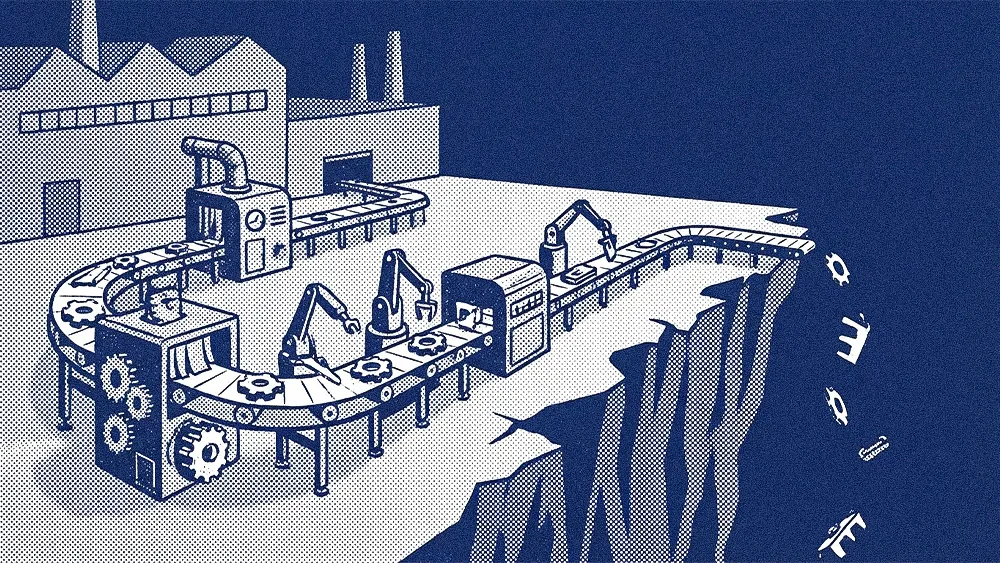

AI-assisted development lets teams build faster than ever, but the real question is whether what they're building can actually be maintained, understood, and trusted in production.

Building a working application over a weekend is no longer the benchmark. The real test for enterprise engineering teams is whether that application can still be understood, audited, maintained, and trusted in production six months later. AI-assisted development has compressed the path from idea to prototype, but the gap between prototype and durable product remains wide.
Ted Murena is Director of Global Marketing Technology at CBRE, the world's largest commercial real estate services and investment firm. With over 20 years of experience building marketing technology systems for global enterprises, Murena works at the intersection of AI, data platforms, and product development across CBRE's technology and marketing organizations.
"AI-assisted development lets teams build faster than ever, but the real question is whether what they're building can actually be maintained, understood, and trusted in production," Murena says. The speed is real. The durability is not.
- Weekend tools, enterprise standards: The ability to build internal tools and prototypes with AI is a genuine accelerator. "Being able to build small tools, internal tools that are showing the promise of AI is absolutely there," Murena says. But the gap between a working demo and a shippable product at a Fortune 100 company is wide. "Getting something out the door, yes. That's good. Is it truly production-ready for a company like ours? That's a thing in itself."
- Code without culture: AI-generated code introduces a provenance problem. When a team has written and reviewed code together for years, there is a shared understanding of how things are structured and why. AI-built code does not carry that context. "Sometimes AI-based code is not the way a human would write it. Or your team would write it," Murena says. "There's a cultural understanding within the code itself." A prompt cannot produce that. When something breaks, teams need to take it apart the same way they would audit third-party code, with full documentation, requirements, and traceability built in.
The result is a new form of tech debt that looks clean on the surface but resists inspection. Code that compiles and passes basic tests but was built without consistent structure or shared development frameworks introduces fragility at scale. Murena calls it what it is: organizations are at risk of building a mud castle that caves in on itself.
- Pilot purgatory: The defining failure mode is not broken code. It is code that works in isolation but cannot graduate to production. "A lot of what we do ends up in this pilot purgatory where we run something, we test it, we might expose it a little bit to the outside, but we're not really ready to ship it and own it because we're not totally sure if it works," Murena says. The documentation, auditability, and long-term maintenance plans simply are not there yet.
- Agents as connectors: Murena sees a shift away from heavy point-to-point integrations. "Do we really need all the integrations that every SaaS platform says we should? Or should we have agents processing data in between?" he asks. That can lower total cost of ownership as platforms evolve. But it demands discipline. "We have to be mindful that we're not building tools that already exist through an API because we can build through an agent and spend a whole lot of tokens to do something feasible through a simple RESTful API."
- Political friction: Engineers with decades of experience resist tools that feel like a devaluation of their craft. At the same time, business users with access to cloud integrations and AI tooling are building things that are close to legitimate, creating tension with IT teams worried about quality and job relevance. "There's excitement and maximalism in some pockets and reticence in others," Murena says. "Making sure everybody sees the goal is harder than ever."
Murena sees the architecture converging on a clear split. The bottom layer is locked-down, well-maintained data infrastructure with rigorous compliance. The top layer is an agent-driven interaction layer that talks to clients, deploys web data, and operates with more flexibility. "That bottom layer, that true technical infrastructure, has to exist and we have to persist with that," he says. Without it, security and observability collapse.
The path out of pilot purgatory is not more code. It is smaller, cross-functional teams that bring business value, product thinking, and engineering together from the start. "You can have a three-person strike force that's thinking about business value, the marketing perspective, and the actual tech," Murena says. "That little team can build something very compelling that hits home for every part of the business. And if you do that, then that product becomes shippable, becomes something worth maintaining, and not just a pet project that IT thinks is great."