
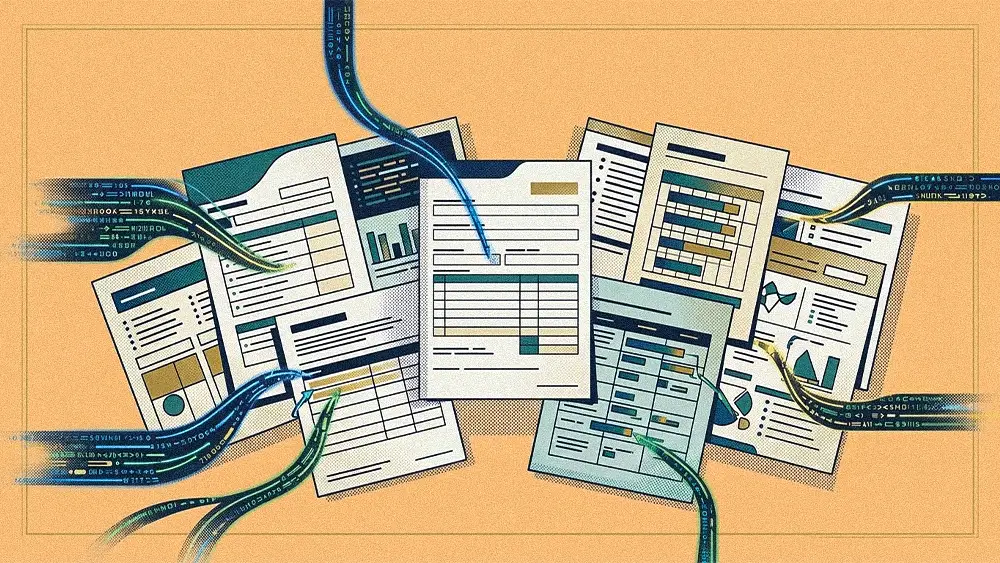
A lot of people say you can just give AI agents access to your data and it will make sense. It works in some cases and it doesn't in others. To plant those facts somewhere, you need a semantic model where all your rules are defined.
 Ashish YadavSenior Data Engineer @ The Modern Data Company
Everyone can rent the same models and platforms now. Frontier intelligence, the lakehouse, the compute, all a credit card away, and raw data edges toward table stakes. The durable advantage is migrating a layer up, into the semantic rules, governance, and speed that turn proprietary data into decisions a business trusts, a shift already forcing a rethink of data management.
Ashish Yadav is a Senior Data Engineer at The Modern Data Company, the company behind DataOS, a platform that packages data into governed, AI-ready data products. He builds petabyte-scale pipelines and lakehouses with an eye on job time and cloud spend, engineers real-time telemetry for sub-second analytics, and mentors the teams doing the same. The moat conversation reaches him from inside the plumbing.
"A lot of people say you can just give AI agents access to your data and it will make sense. It works in some cases and it doesn't in others. To plant those facts somewhere, you need a semantic model where all your rules are defined," Yadav says.
An analytical engine next to the database
Infrastructure is already reorganizing around agents. The newest architecture out of the Databricks AI Summit is LTAP, which unifies transactions and analytics on one copy of data in the lake, following a wave of hybrid designs like AliSQL, which drops a DuckDB columnar engine inside MySQL. The logic is agent fluency. "AI agents are well versed with working with databases, be it Postgres or MySQL. You want a system that is very quick to adopt these changes, because with your Iceberg or data lake, each time you make a change, metadata files get created. It's a lengthy process, plus the operational work of compacting it." Enterprises are still catching up with lakehouse formats from five years ago, he notes, so the hybrid story is where investment is going.
Compute is not cheap anymore
The hesitation he sees is cost fear more than doubt. "Previously with Hadoop, the costs were fixed. You buy the infrastructure once and you're done," he says. "Now, with Databricks charging on the basis of DBUs, the cost can balloon like anything, so they're skeptical." His prescription is a cloud mindset: know your jobs and durations, then buy accordingly. "On AWS you can pay upfront for a year of infrastructure, and that's relatively cheaper than running it on the fly. Compute is not cheap anymore."
The same math is pushing enterprises back toward hybrid setups and architectures that span cloud and on-prem. He points to Basecamp, which bought hardware for repetitive jobs but kept shared data on S3, and to DuckDB resetting the floor for smaller shops. "Today, with 16GB of RAM and a decent laptop, you can process a terabyte of data. You can start with DuckDB, and only when it's not sufficient anymore, scale out to Databricks, Snowflake, or MotherDuck."
Rules written once, used everywhere
The semantic layer is where trust gets manufactured. A vendor coalition just finalized the Open Semantic Interchange specification, an open format that lets semantic models travel between platforms so a metric means the same thing everywhere. Portability matters because of who writes the rules. "The people with the domain expertise set up those rules once, your entire organization utilizes the same information, and you can always come back to your agent and make sure it's giving the same result to everybody."
Model access gets the same discipline. "Enterprises are locking down to specific models. Say you're using Claude. You buy Amazon Bedrock for your company, and because it's in AWS, you can set IAM-level policies and lock users down to the models you provision," says Yadav. Inside Databricks, Unity Catalog splits teams by geography and regulation. "If you're in Europe, you have to follow GDPR, and in the US you have those rules, so you can separate that entirely." That's governance embedded in the platform rather than paperwork, with data readiness gating production AI.
The one digit that breaks trust
The failure mode he keeps seeing is wiring agents straight to raw data. "A lot of people are giving AI agents direct access to their data and expecting magic analytics, without accounting for hallucination, without guardrails, without a person who validates the data." When AI disappoints, the mess is usually the data underneath, and finance shows why. "The financial industry is holding back because they don't trust the data that much. If you're a CFO and somebody submits an AI-generated report to you and even one digit goes wrong, I don't think you will ever trust that report again. That's the kind of trust people need to bake into these products."
The data is still the real moat, in his view. Winning with it is speed. "Take Coca-Cola and Pepsi, two of the same powerhouses. If one makes decisions based on data and is very quick to channel it, the one making the quicker moves has a better chance to operationalize that data than somebody who's sleeping on it."