

How Direct Access To Healthcare Insights Through AI is Improving Decision-Making for CHOs
Wes Wright, Chief Healthcare Officer at Ordr, describes how AI-powered access to insight is changing executive participation while leadership fundamentals stay intact.


The way you communicate up, down, or across the organization hasn't changed. What’s changing is that executives now have AI tools that let them answer questions themselves instead of pulling busy staff into it.
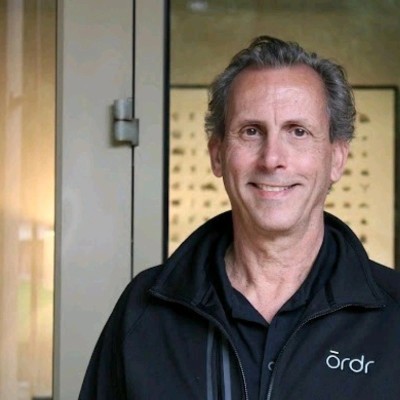
AI has changed many things, but leadership communication isn't one of them. Boards still expect clarity, teams still expect direction, and peers still expect alignment. What has shifted is access. AI now gives executives direct answers they once hesitated to pursue because doing so meant pulling busy teams into the process. That access draws leaders into data-driven workflows they previously watched from afar, reshaping how they participate, build credibility, and guide decisions.
This is the view of Wes Wright, Chief Healthcare Officer at Ordr, a connected asset visibility platform for healthcare networks. Wright brings more than two decades of healthcare IT leadership experience, including roles as CTO at Sutter Health and Imprivata, and CIO at Seattle Children's Hospital. Before that, he spent 20 years with the U.S. Air Force. His perspective comes from leading large-scale technology operations while navigating the gap between IT departments and the clinical teams they serve.
"The way you communicate up, down, or across the organization hasn't changed. What’s changing is that executives now have AI tools that let them answer questions themselves instead of pulling busy staff into it," says Wright. He sees the current moment as an inflection point. For years, healthcare IT deployed AI for clinicians while never using it themselves. Now, multi-agent orchestration is pulling IT and security operations into the AI game, reshaping how they communicate, measure value, and support the rest of the organization.
Insight without interruption: AI changes how leaders make decisions by removing the cost of asking. "There are questions executives have always wanted answered, but they didn’t ask because they knew how busy their teams were," Wright says. "You don’t want to pull people out of their work just to satisfy curiosity." With AI, he explains, leaders can explore those questions independently. "Now I can dig in myself, get context, and understand what’s really happening without creating disruption. That fundamentally changes how informed your decisions can be."
Goodbye, guesswork: That access reshapes leadership participation. "When you have the ability to follow the data yourself, you stop making decisions based on summaries and start making them based on understanding," he continues. Instead of relying on filtered updates or high-level reports, executives can see how systems behave, where constraints appear, and why tradeoffs exist. "It puts leaders closer to the work without slowing the work down. You’re no longer guessing what the right call is because you finally have the context you were missing."
That shift matters even more in healthcare, where leadership decisions carry operational, financial, and clinical consequences at once. For years, AI has been most visible at the point of care, improving documentation, diagnostics, and clinician efficiency, while IT and security leaders supported deployment without directly using the systems themselves. As AI moves upstream into infrastructure, asset visibility, and operations, those same leaders are gaining direct exposure to the systems they support.
Conditions for liftoff: Wright argues that healthcare IT enters the AI moment with a higher trust baseline because it has spent years watching these systems work for clinicians before ever using them firsthand. "We've been observing how AI performs for a long time from the outside, and now that we have seen what it can actually do, there is already a level of trust that most organizations do not have," he notes. That familiarity sets the stage for a familiar adoption curve, where progress stays slow until confidence tips. "Adoption remains a trickle until trust is established, even when the technology is clearly working, and once that trust clicks into place, growth accelerates very quickly," Wright says.
AI clarity: Fear remains a significant barrier to adoption, largely driven by unfamiliarity. Wright argues that closing that gap requires orientation, not immersion. "Right now AI feels like something foreign that has arrived and started making decisions, and most people don't understand what it's doing. Any conversation about AI needs a baseline introduction that makes it feel understandable rather than opaque." The objective, Wright adds, is not technical mastery, but familiarity that allows people to engage with confidence rather than apprehension.
The mechanics of leadership have not changed. The levers have. Executives with AI-assisted insight can now participate in workflows they once watched from a distance, providing proximity that builds empathy, sharpens decision-making, and earns credibility with teams that have been doing the work all along. The leaders who will thrive are not the ones moving fastest, but the ones who apply disciplined thinking to a compressed timeline and earn trust along the way.
"If I were still in the field leading a bunch of people, that's what I'd be using it for," Wright concludes. "Show the folks what we've done and what we can do now. That gets the troops behind the flag."