
Is the US Underestimating How Hard It Is to Build AI Data Centers?
Dr. Michael Ginsberg, President of Tokamak Energy, explains why power supply is only the first bottleneck, why community opposition is being systematically underestimated, and why smarter infrastructure technology matters more than raw speed to interconnection.


The bottlenecks are real. Unfortunately, we tend to underestimate the difficulties of building real physical assets and have consistently run up against the limitations of our existing grid infrastructure.
Multi-gigawatt data center announcements are stacking up faster than the infrastructure to power them. The gap between announced capacity and deployable capacity is where the real risk lives. Competition for powered land is intense, and the communities where these facilities are proposed are pushing back over water use, energy costs, and a lack of local benefit.
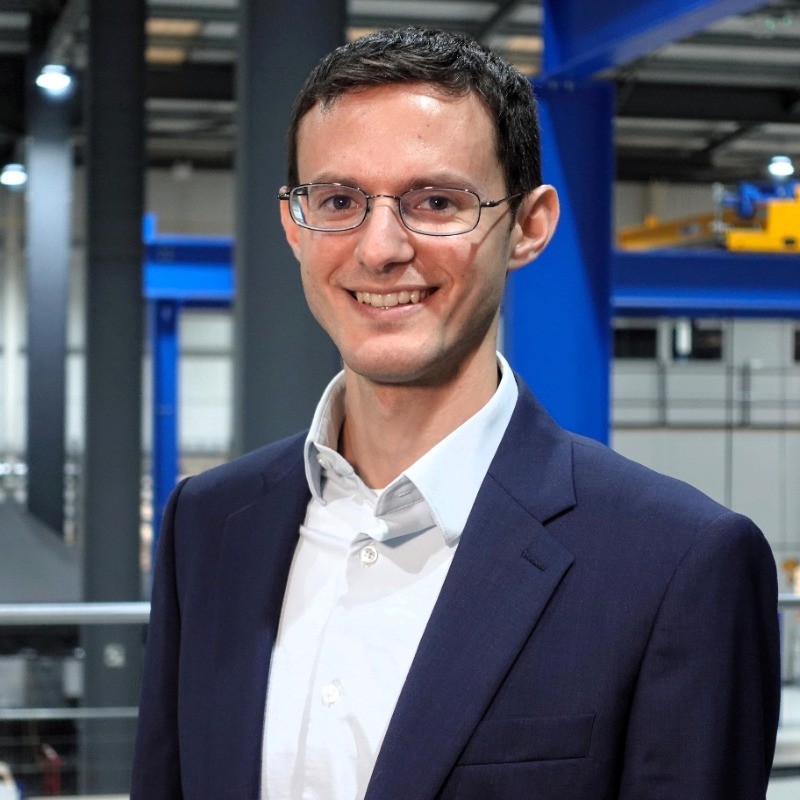
Dr. Michael Ginsberg is President of Tokamak Energy, a fusion energy company that also deploys high-temperature superconducting technologies for data centers, defense, and space. He led a $52M US-UK public-private partnership with the Department of Energy and helped drive the company's $125M Series C. Before Tokamak, he developed one of the largest green hydrogen facilities in the US at Avina Clean Hydrogen. He holds a Doctor of Engineering Science from Columbia.
"The bottlenecks are real. Unfortunately, we tend to underestimate the difficulties of building real physical assets and have consistently run up against the limitations of our existing grid infrastructure," says Ginsberg.
Three bottlenecks, not one
Ginsberg names three constraints that determine how fast AI infrastructure actually comes online, and only the first one is getting adequate attention.
The quickest path to power today is natural gas. Existing pipelines, new buildouts, and the restart of shuttered nuclear plants are all part of the near-term mix. But Ginsberg notes that powered land is becoming scarce. "When I was developing hydrogen plants, we were competing with data center developers for access to megawatts of generation," he says. "Today, there are very few powered-land sites still available."
Getting power to the site is one problem. Getting it from the point of connection to the GPUs is another. Ginsberg points to high-temperature superconductors as a solution Tokamak Energy is already deploying. A recent study with a data center developer showed that superconductors can reduce power distribution losses by up to 90%, deliver up to 9% more usable IT capacity, save millions of liters of water through reduced cooling demand, and use up to 98% less copper, disentangling supply chains from foreign dependencies.
Ginsberg draws directly on his experience developing hydrogen and solar projects. "If local communities don't see the benefits of having a data center, they're going to oppose it," he says. The concerns are specific: water resource consumption, potential rate increases for ratepayers, and a lack of demonstrated upside. "We need to demonstrate what these data centers are going to do for them. Not only that they're not going to have an impact, but what's the benefit they're going to get."
Smarter deployment, not just faster
Ginsberg argues that hyperscalers are optimizing almost exclusively for speed to interconnection when they should also be optimizing for local impact and long-term resilience.
He points to companies developing demand-response capabilities for data centers, making them flexible grid participants rather than one-directional loads. "If a data center can participate in demand response, it might actually get connected more quickly than if it didn't have those capabilities," Ginsberg says. Existing grid capacity is also underutilized, and better transmission-line upgrades and capacity planning could unlock megawatts without new generation. He argues that data centers must be developed in coordination with communities, including careful planning, reinvestment, co-development of power, data center architectures that minimize resource use, and new technologies like superconductors and advanced nuclear, which bring job growth. In this way, data centers can become a source of economic development and reindustrialization, rather than a detractor.
Ginsberg sees public-private partnership as necessary but insufficient without consistent federal standards. "Data center developers need consistency in approach across states," he says. "It can't feel like a wild west for local communities." He acknowledges that the DOE is making progress coordinating across agencies but warns that capital has stalled during political transitions, raising questions about whether the US can maintain investment continuity against competitors that simply decide and commit.
The geopolitical stakes
Ginsberg frames this as more than an infrastructure buildout. AI leadership is increasingly a proxy for national competitiveness, and the country that builds the infrastructure wins the advantage.
Tokamak Energy has operated a tokamak in the UK for 17 years and developed a fusion pilot plant design under a DOE program. Ginsberg says the design shows economic competitiveness with traditional energy sources on a dollar-per-megawatt-hour basis. "It's not just 'fusion is great.' In order for it to have a part in the energy mix, it has to be competitive," he says. Papers backing up those economics are expected in the coming months.
The anxiety Ginsberg describes at the conference he attended during the interview reflects a broader concern across the data center development community. "If we continue to try to do it the way we are, I'm really fearful that we will just get bottlenecked," he says. "And as a country, we're going to lose this race. That's synonymous with not only defense and security, but the future of civilization, it seems."