
Whether the enterprise wants to transform or not, they have no option because they will not run their infrastructure in an unsupported landscape.
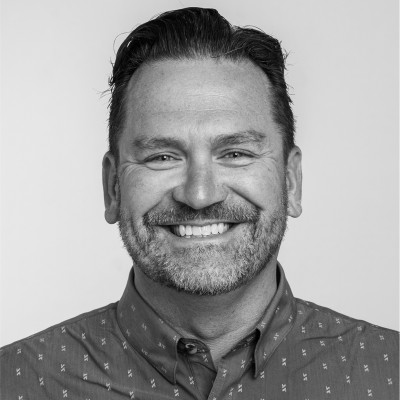 Mark WylyFounder & CEO @ LogiCloudiQ
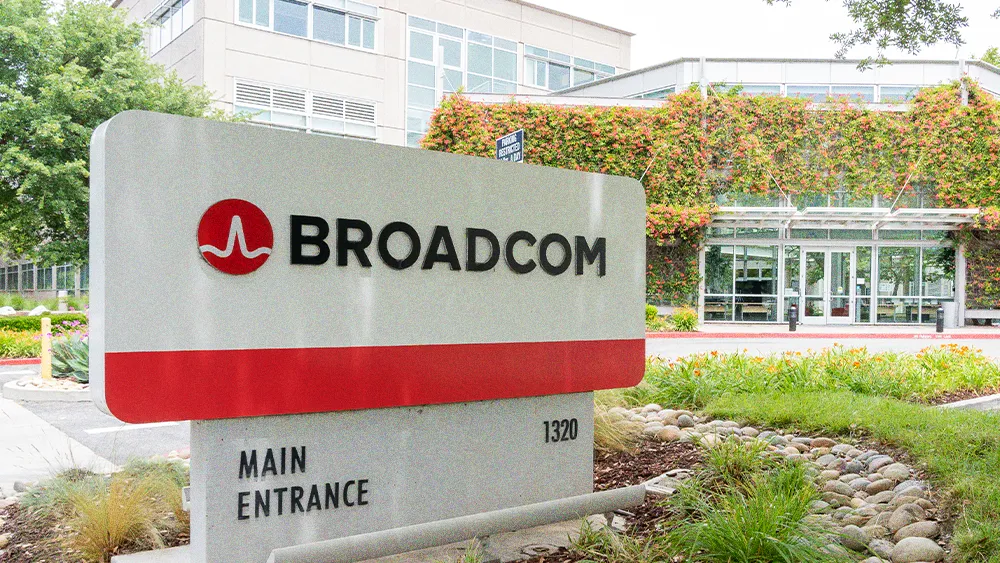
Broadcom’s VMware price hikes may be creating immediate budget pressure, but they're not the root of the problem. For years, many enterprises have failed to maintain clear oversight of their applications and workloads, allowing VMware to become the default platform for nearly everything. That convenience eroded negotiating power long before the acquisition, making the current disruption largely predictable. Perhaps Broadcom’s move didn't create this long-standing dependency, but it did reveal it.
One expert who saw this coming is Mark Wyly, Founder and CEO of LogiCloudiQ, an integrator built for the AI and hybrid era. With over 20 years in the trenches at firms like Windstream and Lumen, Wyly has spent his career at the heart of enterprise infrastructure. He's seen this playbook many times before and knows exactly how enterprises lost their leverage. For Wyly, the only way out is for leaders to fundamentally rethink the relationship with their own infrastructure.
The VMware moment is less about reacting to a vendor decision and more about confronting a long-ignored structural reality, Wyly explains. From his perspective, Enterprises are being forced into transformation by the consequences of years of unchecked convenience. "Whether enterprises want to transform or not, they have run out of options. They will not run their infrastructure in an unsupported environment," Wyly said. "The question for the CIO is simple: do you want to own your transformation, or do you want to be convenient and expensive?"
Cause vs. symptom: For years, applications were put on VMware because it was performant, cost-effective, and well-supported, Wyly explains. "Now it’s not cost-effective, it’s not supported," he says, and those past decisions are coming back to haunt organizations. "VCF pricing is like a 102-degree temperature," Wyly says. "You have to get that down, but while you’re doing it, you also have to address the underlying pneumonia, which is the lack of application and workload awareness."
According to Wyly, the vulnerability stems from a long-term dependency on a platform that was once the path of least resistance. As a result, even major partners are hesitant to offer transparent alternatives, fearing removal from Broadcom's "Pinnacle list" of approved resellers. His prescription is a three-step framework: renew, assess, and mitigate.
The approach is particularly relevant given the business timeline driven by the sunsetting of vSphere as part of the move to VCF 9. In Wyly's framework, the "assess" phase is the most important. Advising leaders to "slow down to speed up," he uses the analogy of a "VMware trailer" packed haphazardly over the years. Before you can modernize that infrastructure, you must first pull it over and unpack it to see what you actually have.
Déjà vu incoming: Simply jumping to another platform without this analysis can lead to significant cost overruns and operational risks, Wyly continues. Today, this underscores the need for a better approach to cloud security architecture. "You can’t just look at alternatives if you don’t know what’s in the closet," Wyly warns. "You could go to Nutanix, but I will tell you, in the next two to five years, someone's going to acquire them and do the same thing. Now you're back in the same environment."
The turning point: Only once the assessment is complete can CIOs truly enter the "mitigate" phase and start clawing back the leverage they’ve been missing. The process of unpacking applications and workloads reveals where each one belongs, naturally leading to a diversified, hybrid environment. He explains this is the path to both maximizing the value of a VMware environment and building lasting negotiating power. "Once you cross about 500 cores, staying single-platform puts you at a permanent disadvantage," Wyly says. "A hybrid model is what restores leverage, because no one provider controls your pricing or your future."
But the VMware challenge is just the opening act for a much bigger competition: the battle for control over AI infrastructure. Wyly believes Broadcom’s actions are driven by a long-term strategy to control the foundational layer of the next-generation internet. "They want to own the AI infrastructure layer in the same way Cisco did in the network infrastructure from 2000 to 2010." He cautions that if infrastructure teams don't get control of this foundational AI layer, they risk becoming "financial hostages for the next 10 years."
The lesson isn’t just about VMware, Wyly continues. It’s a warning about the cost of convenience that extends directly into AI. Wyly contends that most AI failures aren’t caused by weak algorithms but by poor data access, and that without a unified data architecture and clear compute governance, enterprises are repeating the same mistakes.
And now, AI: In rushing toward hyperscaler convenience, companies could risk surrendering control of their core AI intellectual property to platforms that will ultimately expect a share of the value. "Convenience always looks cheap at the beginning," Wyly says, "but it’s the same pattern we saw with VMware. You trade visibility and control for speed, and years later, the platform providing that convenience starts claiming a share of the upside."
The current moment is an echo of the past, Wyly concludes. "We are absolutely in an AI bubble, but that doesn't mean we aren't also exponentially underestimating its long-term impact. Like the dot-com era, it's a perfect example of where two seemingly contradictory statements can both be true." It's a transformation he views as a profound and lasting economic trend, one already being shaped by the next generation of business leaders.